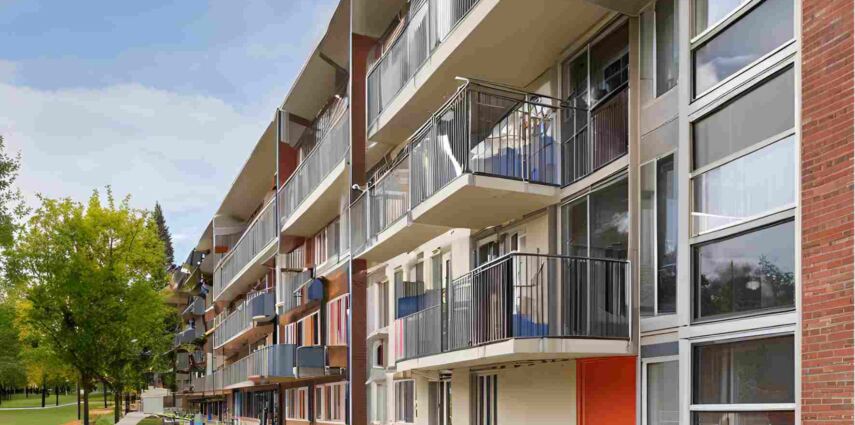
How to terminate the lease of a leaseback in a tourist residence

How to terminate the lease of a leaseback in a tourist residence traesch lawyer

Notice: how to terminate a commercial lease

1 – Terminate the Lease: Sending the notice to the right people

When given by the lessor, the notice must be sent to the lessee, or to each of them if there are several. If the tenant decides to terminate, he or she must send the notice to the person having the status of lessor; if there are several lessors, the notice sent to one of them takes effect for all the others.

The involvement of a lawyer before this stage ensures that no irregularities are made. An irregular notice will force the owner-lessor to issue a new notice and once again respect the notice period stipulated in the commercial lease. In practice, the notice period specified in the commercial lease ranges from 6 to 12 months.

2 – Terminate the Lease: Sending notice at the right time

In principle, the tenant must send his notice at least six months before the expiry of each three-year period (i.e. at least six months before three years following the conclusion of the lease, then six years, then nine years). Both parties can send notice at the end of the contract, also giving at least six months’ notice.

However, in the case of a lease for a tourist residence, article L.145-7-1 of the French Commercial Code prohibits the tenant from giving notice at the end of a three-year period. In other words, when the operator of a the leaseback property (tourist residence) signs a contract with the lessor, he is committed for at least the first 9 years.

Where notice is given late, its effect is postponed until the last day of the following quarter. Example: the lease for the tourist residence was due to expire on 30/01/2019, and the tenant sent his notice on 15/11/2018; the notice will only take effect on June 31, the last day of the quarter.

If the notice is given too early, it will take effect on the expiry date of the lease or, if it is given during the course of the lease, on the expiry of the next three-year term.

3 – Taking care with the form and content of the notice

Notice of termination from the lessor

Articles L. 145-9 and L. 145-4 of the French Commercial Code require the lessor to deliver the notice to the lessee(s) by bailiff. The notice must contain the following elements :

  • a clear and unambiguous notice to terminate the contract ;
  • a statement that any tenant wishing to contest the notice must take the matter to court within two years of the date of notification;
  • the reason why the lessor is giving notice.

The notice without eviction indemnity must refer to the serious and legitimate reasons already set out in a prior formal notice to the lessee (the operator of the leaseback or tourist residence).

Notice with eviction indemnity does not require a reasoned refusal to renew the commercial lease.

The specialized lawyer can supervise the bailiff’s work on behalf of the lessor to avoid drafting errors (e.g.: notice without eviction indemnity with an erroneous mention such as “sale”).

Notice of termination from the tenant

The operator of a tourist residence who gives notice of termination at the end of the contract (or during tacit extension) can only do so by bailiff’s writ. He is not required to explain the reason for his notice.

Do not hesitate to contact us to ask us your questions via the contact form at the bottom of the homepage.


Unpaid rent: solutions

leaseback traesch lawyer

What should a landlord do about unpaid rent?

Landlords are sometimes faced with what they dread most: a tenant who stops paying rent. This is a major problem, and one that can leave landlords feeling helpless and powerless. What can you do if this happens? What legal remedies are available?

How to recover rent arrears?

The first thing a landlord is interested in is recovering what is owed, i.e. all the payments that have not been made each month. This is called rent arrears.

This shortfall can put the landlord in a delicate financial position, which is why it’s urgent to take action, so that the situation doesn’t drag on.

There are two steps to take:

  • the landlord must issue a summons to pay
  • and, one month later, refer the matter to the interim relief judge to obtain termination of the lease and an order to pay the debt.

Step 1: Order to pay unpaid rent

Two months after having a bailiff issue a summons to pay unpaid rent, the landlord must apply to the district court to have the lease terminated and the tenant evicted.

The tenant then has two months in which to settle the rental debt and the cost of the payment order. If the tenant has not settled his debt within this period, the landlord is then in a position to move on to the second stage: bringing the matter before the magistrate (juge des référés) of the court.

To do this, he or she must instruct a lawyer to draw up a writ of summons before the tribunal. Please note: this summons must be sent to the prefect at least two months before the hearing date, failing which it will be inadmissible.

Let’s take a closer look at this second step…

How do you terminate a lease for unpaid rent?

In addition to simply paying the rent owed, the landlord is interested in terminating the lease and evicting the offending tenant. A complex procedure, the main stages of which can be summarized as follows…

Step 2: The court of first instance to terminate the lease and request eviction

First of all, the landlord applies to the court for termination of the lease and eviction of the tenant.

The tenant can ask for up to 24 months to pay off his debt (article 1244-1 of the French Civil Code).

This repayment of rent arrears is in addition to the payment of rent, which must be resumed.

If the tenant defaults on a single payment, the landlord can begin eviction proceedings without having to go before a judge again.

The judgment (order) must be delivered to the tenant by a bailiff, together with a summons to vacate the premises. The tenant then has two months to vacate the premises.

Please note

evictions are prohibited between November 1 and March 15 (article L613-3 of the French Construction and Housing Code). This is known as the “winter truce”. It is thought that it would be too difficult to find oneself without housing in the middle of winter, in the cold. It is therefore advisable to launch this procedure while ensuring that its progress respects this timetable, so as not to be interrupted by the winter truce.

Conclusion

As you can see, if you’re a homeowner faced with this problem, there is legal recourse available to you. All you have to do is contact us by filling in this form.

Eviction compensation: the judges against the expert

Eviction compensation the judges against the expert traesch lawyer

Judges sometimes review and modify the expert’s calculations

Summary

The court uses the sales method instead of EBITDA. Only the accounts certified by the chartered accountant are taken into account in determining the amount of the eviction indemnity. The judges rejected the appraiser’s assessment of potential revenue after renovation work had not been carried out.

Hotel, Sales method. Total eviction compensation: €1,459,535 + €163,238 = €1,622,773

Calculating eviction compensation

Sales instead of EBITDA method

The low profitability of the business, which has only 16 rooms after renovation work, means that the gross operating surplus method of valuing the business should not be used. In this case, the judges opted for the sales-based method.

Only the accounts certified by the chartered accountant are taken into account.

The lessee company asked that the sales figures for 2011, 2012 and 2013 be taken into account, on the grounds that the eviction indemnity should be assessed at the date closest to the eviction, while the B. consorts pointed out that the accounting results for 2012 and 2013 had not been certified by the company’s chartered accountant. Relais Hôtel Esmeralda counters that the certificate issued by the company’s chartered accountant includes the sales figures shown in the accounting documents for both 2012 and 2013. The judges rejected the draft accounts, retaining only the sales figures for the years certified by the chartered accountant.

Judges reject expert’s assessment of potential revenue after renovation work not carried out

The court rightly rejected the appraiser’s approach, which consisted in assessing potential revenue taking into account the renovation work carried out on the premises, Relais Hôtel Esmeralda asked that this approach be retained, since it takes into account a probable but not certain renovation hypothesis, which in any case has not been carried out by the lessee, and consequently cannot be taken into account when assessing the hotel’s current value, unless this potentiality is taken into account at the same time as the excellence of the location when assessing the multiplier coefficient.

The multiplying factor usually used for 1-star hotel transactions varies from 3.5 to 4 times the average sales figure, depending on the expert; given the hotel‘s excellent location and renovation potential, a factor of 3.5 should be used, so that the main indemnity is set at : 417 010 € x 3, 5 = 1 459 535 €

Ancillary indemnities

Replacement costs

The rate of 10% applied to reinvestment costs is not seriously contested, as the B. consorts are asking that a rate of 8% be retained in the event of a renegotiation of the rate, given the amount involved in the transaction; however, this is a random element which cannot form the basis of a calculation, so that reinvestment costs will be retained at €145,953.

Disturbance of trade and social costs

The amounts of compensation for commercial disruption and social costs as retained by the court are not contested and will be confirmed. Relais Hôtel Esmeralda also seeks compensation for the portion of unamortized investments it is abandoning, in the amount of €267,001, without claiming relocation costs as such, which in any case would not be equivalent to the unamortized investments, so this claim will be rejected. Redundancy costs will be paid on the basis of receipts.

Total eviction compensation

The total eviction compensation therefore amounts to : 1 459 535 € + 163 238 = 1 622 773 €. COUR D’APPEL Paris June 11, 2014 n° 12/13816 , Pôle 05 ch. 03

If you have any questions, please contact us using the contact form at the bottom of the page.

Eviction compensation for a hotel residence

Investment Property Eviction compensation

Learn about eviction compensation for hotel residences and the various factors considered in determining the amount, including business value and reinvestment costs.

Eviction compensation for a hotel residence with short-term rentals

The essentials

Hotel residence with short-term rentals

Eviction compensation for the residence’s operating company: €1,113,000 and €63,807.98 for staff dismissal costs.

Commercial lease: Calculating the amount of eviction compensation

Main indemnity

Average sales over the last 3 years at the date of the expert appraisal and capitalization of average profits over the last 3 years.

Expert L. proposed an eviction indemnity of €1,136,000, the amount retained by the first judges, including the following items of loss:

  • 1,000,000 € for the value of the business, calculated on the one hand on the basis of average sales over the last three years of operation at the time of the appraisal, and on the other hand on the basis of the capitalization of average profits over the last three years of operation.

Re-employment indemnity: 10% of the value of the goodwill

  • 100,000 € in compensation for reinvestment based on 10% of the value of the business.

Disturbance of business: 25% of average profit over last 3 years

  • 11,000 € in compensation for commercial disruption, intended to compensate for the loss suffered as a result of the cessation of business, and set at a quarter of the average profit for the last three years.

Cost of moving personal effects

  • 2,000 € for removal costs for personal effects only, equipment being compensated in the value of the business.

Staff redundancy costs

63,807.98€ for staff redundancy costs

Unpaid commercial rents

Termination of the lease for unpaid rent

Breaking a commercial lease in the event of unpaid rent

Sometimes, the tenant of a commercial lease stops paying the rent.

How should the landlord react to this situation, which can be extremely detrimental to him financially?

What is the law on which he can rely to terminate his lease with this indelicate tenant?

Automatic termination after one month’s delay?

The commercial lease sets a deadline by which payment must be made each month. But what happens in the event of non-payment? This is specified in the termination clause. Generally speaking, it stipulates that the contract is terminated after one month’s delay. As you can see, this provision seems to be to the landlord’s clear advantage, providing effective protection in the event of unpaid rent.

But it remains theoretical, and there’s a big leap from theory to practice. In reality, the courts do not terminate commercial leases after a single month’s delay.

What we’re interested in here is practice. So what can a landlord do in practice, when faced with a problem of this type, which tends to drag on and on?

Order to pay

The first unpaid bills must be dealt with quickly. The landlord should instruct a lawyer to issue the tenant with a summons to pay, in accordance with the termination clause of the commercial lease. Here you’ll find details of this document, which is the only one with any legal value in your attempts to recover what is owed to you from your tenant. Any other approach, such as a letter you might send to convince your tenant, has no legal value. We naturally advise against intimidating letters and other pressure tactics that could backfire.

Applying to the summary proceedings judge for termination of the contract

If this first step is unsuccessful, the following month you must move on to the second stage: apply to the interim relief judge for termination of the commercial lease.

You should entrust this task to a lawyer specializing in commercial law. Do not hesitate to contact us for this type of assignment.

At the end of this procedure, you will obtain termination of the commercial lease and an order that the tenant pay the arrears. The interlocutory injunction (the “judgement”) enables the decision to be enforced, i.e. seizures, etc., to be carried out.

The problem will then be resolved.

Note: the judge may also grant the commercial lessee extended payment terms.

Conclusion

As you can see, the law protects you. As a lessor, you are not helpless in the face of this type of practice, which can plunge you into financial difficulties.

With the right support, you can get out of the situation unscathed.

For many years now, we have been offering legal assistance in this type of problem. Take advantage of our know-how!

The important thing is to try to foresee this type of problem in advance, and add clauses to protect you when drafting the lease, even before a tenant signs it. This is a service offered by our specialized lawyers, and can help you avoid many problems later on.

If you have any questions, please contact us using the contact form at the bottom of the page.

Who has to pay the eviction indemnity ?

Student residence lease renewal traesch lawyer

A) The debtor of eviction damages

The debtor of the eviction indemnity is the party who issued the notice without an offer of renewal. Thus, in the event of sale of the building after the notice has been given, the debtor of the indemnity is the former owner (Cass. 3e civ., April 5, 2011, n° 10-18.241 : JurisData n° 2011-018848; 2011). Unless otherwise agreed in the deed of sale (Cass. 3e civ., Nov. 29, 2005, n° 04-17.723 – Cass. 3e civ., March 5, 2008, n° 06-19.237). In the event of dismemberment of ownership, the owner’s purchaser, upon renewal of the commercial lease, is not necessarily jointly and severally liable with the usufructuary skeleton of the eviction indemnity debtor (Cass. 3e civ., 16 déc. 2019, n° 18-26.182).

B The creditor of the eviction indemnity

The creditor of the eviction indemnity is the lessee or assignee who has acquired the business subsequent to the notice of termination, as the transfer of the business entails the transfer of the eviction indemnity due to the transferor and of the right of the latter to remain on the premises under article L. 145-28 of the French Commercial Code (Cass. 3e civ., April 6, 2005, no. 01-12.719).


C Payment of eviction compensation, a prerequisite for restitution of the premises

The law provides protection for the lessee right up to the last stage of the parties’ relationship. They provide for a protective chronology, authorizing the lessee to hand over the keys to the lessor after payment of the eviction indemnity.

D Payment to the lessee or an escrow

Payment may be made to the evicted lessee or to an escrow. Although payment into the hands of the lessee is the simplest option, it is rare in practice, since guarantees in the hands of the receiver will provide the lessor with guarantees when it comes to obtaining restitution of the premises, which payment into the hands of the lessee does not offer.

Appointment of an escrow account

The escrow may be appointed by mutual agreement of the parties or by a judge.

If you have any questions, please contact us using the contact form at the bottom of the page.

Is Eviction Indemnity Constitutionnal ?

traesch lawyer

Decision no. 2020-887 QPC of March 5, 2021 by the French Constitutional Council addresses the question of the constitutionality of article L. 145-14 of the French Commercial Code, in particular the provisions concerning the eviction indemnity due to the tenant in the event of non-renewal of a commercial lease. Here is a summary of the main points of the decision:

Dispute

– Compagnie du grand hôtel de Malte**: The question prioritaire de constitutionnalité was raised by this company, which contested the potentially disproportionate nature of the eviction indemnity provided for in article L. 145-14 of the French Commercial Code. In the company’s view, this indemnity could infringe the lessor’s right of ownership, freedom of contract and freedom of enterprise.

Main points of the decision

1. Purpose of article L. 145-14 of the French Commercial Code :


– This article stipulates that a lessor who refuses to renew a lease must pay an eviction indemnity to the lessee, equal to the prejudice caused by the failure to renew. This indemnity includes the market value of the business, determined in accordance with industry practice.

2. Arguments of the Applicant Company :
– The applicant company contests the obligation to pay an indemnity that systematically includes the market value of the goodwill, regardless of the reality of the loss.
– It points to an alleged infringement of property rights and to differences in treatment contrary to the principle of equality before the law.

3. Examination by the Conseil Constitutionnel :
– Property rights : The Conseil Constitutionnel acknowledges that article L. 145-14 limits the right of ownership, but considers this limitation justified by the general interest objective of protecting the viability of businesses.
– Principle of Equality** : The decision affirms that the difference in treatment between commercial leases and other types of leases is justified and directly related to the purpose of the law.

4. Final Decision :
– The Constitutional Council ruled that the contested provisions do not disproportionately infringe property rights, nor violate the principle of equality before the law.
– It declared that the words “include, in particular, the market value of the goodwill, determined in accordance with the practices of the profession” comply with the Constitution.

Conclusion

The decision confirms the constitutionality of the provisions of article L. 145-14 of the French Commercial Code concerning eviction compensation.
It emphasizes that the legislator has taken into account the general interest and the rights of the parties involved in commercial leases, by allowing fair compensation for tenants evicted without lease renewal.

If you have any questions, please contact us using the contact form at the bottom of the page.

Waiver Eviction Damages

waiver eviction damages traesch lawyer

Court of appeal decisions dealing with waiver and eviction indemnity clauses in tourism residences can be complex, and vary according to the specific circumstances of each case. Here are a few examples of decisions dealing with these topics:

1. Waiver clause :


– Paris Court of Appeal, February 12, 2019, no. 17/12879 : This decision examined the validity of a waiver clause included in a commercial lease for a tourist residence. The court emphasized the importance of verifying that the waiver clause had been accepted in a free and informed manner by the tenant.

2. Eviction compensation :


– Lyon Court of Appeal, October 3, 2018, no. 16/05719 : In this case, the court ruled on the tenant’s entitlement to eviction compensation following the termination of a commercial lease in a tourist residence.

The court ruled that the tenant was entitled to compensation due to the non-renewal of the lease.

3. Specific contractual clauses :


– Bordeaux Court of Appeal, November 15, 2017, no. 15/03625 : The court examined a contractual clause limiting the amount of eviction compensation in a lease for a tourist residence.

The decision confirmed that such clauses must be clearly drafted to be enforceable.

These examples show that court rulings can depend on the specific terms of lease agreements and the circumstances surrounding the termination or renewal of leases in tourist residences.

Courts often assess the clarity and transparency of contractual clauses, as well as respect for the rights of the parties involved.

If you have any questions, please contact us using the contact form at the bottom of the page.

Nexity Studea Clichy: How much are the eviction damages ?

Résidence Nexity Studea Clichy:

The judgment handed down on July 1, 2024 by the Nanterre judicial court concerns a dispute between NEXITY STUDEA and a lessor.

Summary of facts and decision: eviction compensation for the Nexity Studea Clichy residence.

Background to the Nexity Studea Clichy residence

In 2008, Mr B M leased premises to LAMY RESIDENCES (now NEXITY STUDEA) for a student residence. 2010 M. A purchased the premises in 2010. In 2017, Mr. A refused to renew the lease and proposed an eviction indemnity. The parties have not reached agreement on the amount of this indemnity for the Résidence Nexity Studea Clichy apartment.

Nexity Studea sued Mr. A for payment of the eviction indemnity. In 2021, the court confirmed that Nexity Studea was entitled to eviction compensation and ordered an expert appraisal to determine the amount. The expert, Ms. BACOT-REAUME, estimated the eviction indemnity at 15,549 euros and the annual occupancy indemnity at 5,500 euros.

Claims by the operator of the student residence and the lessor of the Nexity Studea residence

Nexity Studea claimed 34,045.83 euros in eviction compensation.
– Mr. A requested judicial termination of the lease or eviction compensation set at 13,479.30 euros for the apartment in the student residence in Clichy.

Court ruling on eviction compensation

The court rejected the request for judicial termination of the lease on the student residence property.
– It set the eviction indemnity at 13,549 euros, including :
– 12,673 euros for the main indemnity,
– 180 euros for the commercial disturbance,
– 696 euros for unamortized work.
It rejected the claims for ancillary compensation that were not supported by sufficient evidence.
– The occupancy indemnity payable by Nexity Studea was set at 5,396 euros per year, from October 1, 2017, until the premises are vacated.
– Costs, including expert fees, will be borne equally by each party.

Please feel free to ask us any question here.

Adagio Montrouge Unpaid Rent

Adagio Montrouge unpaid rent traesch lawyer

The summary order issued on July 1, 2024 by the Judicial Court of Nanterre concerns a dispute between two lessors and the company Adagio. The dispute arose from a commercial lease entered into on March 9, 2007 for a condominium lot in the Adagio Paris Montrouge tourist residence. The plaintiffs summoned the Adagio company before the interim relief judge for unpaid rent for the years 2020 and 2021, totaling 4,950.56 euros. They also claimed 6,000 euros in damages for abusive resistance, as well as 1,800 euros under article 700 of the French Code of Civil Procedure to cover legal costs.


The landlords argued that Adagio could not invoke cash flow difficulties or restrictions due to the COVID-19 pandemic as force majeure to justify the unpaid invoices. They pointed out that the general ban on receiving the public did not constitute a loss of the leased property, and did not release the operator from his obligation to pay rent.

In response, Adagio argued that the administrative measures imposed during the health crisis made it impossible to operate the premises commercially, thus justifying the exception of non-performance and the partial loss of the leased property. Adagio also contested the claim of abusive resistance. After hearing the arguments of both parties, the court ruled that the administrative measures relating to the health crisis were not attributable to the lessor and did not constitute a breach of the obligation to deliver. Consequently, it rejected Adagio’s arguments concerning the exception of non-performance and the partial loss of the leased property. The court recognized that Adagio’s obligation to pay the unpaid rent was not seriously disputable, and ordered it to pay the plaintiffs €4,950.56.

4,950 € in covid rents

On July1, 2024, the interim relief judge of the Nanterre judicial court ordered a Pierre et Vacances group company to pay a lessor of the Adagio Montrouge tourist residence a total of €4,950 in unpaid covid rent.

The judges ordered PIERRE ET VACANCES to pay €1,200 in legal fees.

6,150 € total sentence

The operator must therefore make a total payment of €6,150.

Operator resists Court of Cassation ruling

PIERRE ET VACANCES group companies continue to refuse to pay their unpaid covid rents, despite the June 30, 2024 rulings of the French Supreme Court. The courts have been particularly hard hit since the covid years, lengthening the time it takes to hand down judgments.
The order is declared provisionally enforceable, allowing claimants to recover sums due immediately without waiting for a possible appeal.
This decision reflects the strict application of contractual obligations despite the exceptional circumstances linked to the pandemic, reaffirming that economic difficulties and administrative restrictions do not systematically justify the suspension and extinguishment of rental payment obligations.
If you have any questions, please contact us via the contact form here.

ASK YOUR QUESTION (FREE) - RESPONSE WITHIN A BUSINESS DAY

We will respond to all e-mail contacts within a business day. We Make French Law Understandable. The answer to your question will be written only by a partner of our law firm.