Occupancy allowance: a criticizable automatic deduction for precariousness

MADAME VACANCES

In brief:

Theoccupancy indemnity may be reduced for precariousness if the tenant suffers prejudice due to legal uncertainty, but this abatement is refused without concrete proof of prejudice or economic impact. Exceptions include the non-indispensability of the premises to the tenant’s main business, growth in sales, or work carried out by the tenant that is not precarious.

Occupancy indemnity: definition of precariousness in case law

The occupancy indemnity may be subject to a reduction for precariousness, due to the legal uncertainty that has prevented the lessee from making the necessary investments or amortizing those already made (Cass. civ. 3e, March 20, 2007, no. 06-10.476, unpublished).

Exception 1 for a reduction in occupancy indemnity: premises not essential to business activity

However, this reduction in occupancy indemnity for precariousness is not justified when the premises in question, although used as a storeroom, is not essential to the tenant’s main business activity (CA Paris, 16th ch., November 23, 2005, no. 04/13690).

Lack of proof of prejudice

Theallowance for precariousness is rejected if the tenant does not prove the reality of a prejudice. (Cass. Civ 6 novembre 1970, JCP 1971, III, p. 229)

Exception 2: Failure to prove the economic impact of non-renewal

The lessee must establish the economic impact of non-renewal of the commercial lease on his business. (CA Toulouse, December 15, 2009, n°09/02230)

Exception 3: Growth in sales since notice was given

Growth in sales since the notice of termination demonstrates the absence of prejudice (CA Versailles, October 6, 2015, n°14/07907), which would justify a reduction in the occupancy indemnity (replacing the rent after termination).

Exception 4: Work carried out by the lessee

This will be particularly the case where work has been carried out by the operator of a tourist residence that is not precarious, as noted by the legal expert in hislegal expert’s report.

In the absence of justification by the legal expert of this unjustified reduction in “rent” (occupancy indemnity) and of unjustified enrichment of the operator of the tourist residence, the court will have to set aside the reduction inoccupancy indemnity proposed by the legal expert.

Feel free to ask a lawyer your question using the contact form.

Leaseback tourist residence: Termination of lease

Leaseback tourist residence Termination of lease traesch lawyer

The decision of the Grenoble Court of Appeal, Commercial Division, dated November 23, 2023, concerns a dispute between SARL Grange d’Arvieux Résidence and the co-owners of a tourist residence. The dispute concerns the termination of the leases and the refusal to renew the commercial leases, notably due to rent arrears over several years.

A subsidiary of Mona Lisa

The residence, initially operated by Transmontagne Résidences, was taken over in 2007 by a subsidiary of Mona Lisa. The leases included a fixed rent supplemented by a variable portion calculated on the basis of sales generated by the operation of the units. In 2015, the lessors demanded payment of unpaid rent for the years 2007 to 2014 and refused to renew the leases, citing these arrears. The lessee then went to court to contest these formal notices and request renewal of the leases.

Leases terminated ipso jure

In May 2021, the Gap judicial court ruled that the leases had been terminated by operation of law with effect from January 25, 2016, due to the operating company’s breaches. The court ordered theeviction of the company and ordered it to pay the rents owed to the co-owners, as well as an occupancy indemnity for the period following termination of the leases. The company appealed against this decision.

The operator claims that the notices of termination are null and void

Grange d’Arvieux is contesting the lower court’s decisions, arguing that the landlords’ notices of termination were issued in bad faith to avoid paying an eviction indemnity.

It also contends that some of the rent arrears claimed are time-barred. She also contests the payment orders and argues that the resolutory clause has been invoked in an abusive manner.

She is asking the court to declare the dismissals issued null and void, to renew the leases under the same initial conditions or, failing that, to appoint an expert to determine the rental value of the property in order to set the rents for the renewed leases.

Landlords seek confirmation of termination

The co-owners claim that the operating company has failed to meet its obligations, particularly with regard to the payment of rent and the provision of compliant insurance certificates.

They are seeking confirmation of the termination of the leases and payment of the rent arrears, plus statutory interest.

Confirmation of the termination of the leases

The Court of Appeal ruled in favor of the landlords, except in the case of certain overdue rents, which were deemed time-barred for this reason:

Overturns the judgement insofar as it states that there is no reason to impose a penalty in the present situation’;

Confirms the other provisions of the judgment submitted to the court;

ruling again;

Declares the voluntary intervention of [YU] [EC] admissible’;

attaches a daily penalty of 100 euros to the obligation imposed on [Address 121] to vacate the premises, in the event of failure to vacate the leased premises within two months of notification of the present judgment’;

Limits the duration of this astreinte to three months’;

adding thereto’;

Declares the lessors’ claims for payment of rent accrued prior to September 13, 2011 to be time-barred;

Orders the company [Adresse 121] to pay each of the respondent lessors the sum of 500 euros pursuant to article 700 of the French Code of Civil Procedure, as well as the costs of serving the summonses and refusals to renew, with distraction in favor of Maître Botrel, a lawyer at the Gap bar;

Condemn the company [Address 121] to pay Gan Assurances the sum of 3,000 euros pursuant to article 700 of the French Code of Civil Procedure and the costs’;”.

Conclusion

This ruling illustrates the difficulties frequently encountered in the management of commercial leases for tourist residences, in particular the issues linked to resolutory clauses and the reciprocal obligations of the parties. The Court’s final decision will have a significant impact on how operators of tourist residences negotiate and execute their contractual commitments to co-owners.

Ask your questions to one of our lawyers via the contact form.

Independent lawyers dedicated exclusively to protecting the assets of rental property owners.

Independent lawyers dedicated exclusively to protecting the assets of rental property owners traech lawyer

Frenchleaseback investments don’t live up to their promises. Our firm can help.

We help lessors of tourist and student residences when their investment fails to live up to its promises.
We intervene at every stage: from negotiation to litigation and sale on the secondary market.

Action plan to save your assets

  1. HIGH VALUE ADDED INFORMATION: Ask your question free of charge to a tourist residence lawyer.
  2. EQUALITY OF ARMS THROUGH THE GROUP: Join a group and pool costs and information, join forces to achieve equality of arms with the operator.
  3. JOIN A NATIONAL AND INTERNATIONAL NETWORK OF LESSOR CUSTOMERS: we run a network of around 100 active customers in various tourist and student residences.
  4. MODEST AND PREDICTABLE COSTS: Sign an engagement letter based on an estimate, with fixed and definitive fees, regardless of the number of lots owned by the landlord. Divide legal fees by 5.

If you have any questions, please contact us using the contact form at the bottom of the page.

Investing in a leaseback residences: 7 tips

traesch lawyer

If you want to invest in real estate and benefit from the many advantages of tax exemption, there are a number of pitfalls to avoid. What are these pitfalls and how can you avoid them? Our real estate lawyer answers these questions in this article…

There are three key points to bear in mind when considering a real estate transaction of this type:

  • have a precise idea of the yield and final rent of the property in question
  • carefully analyze the exact clauses of the contract you are signing
  • anticipate the resale of the property

Let’s take a look at each of these points.

Annual yield and rent for the end customer

Tip no. 1: the marketer of the serviced residence you wish to acquire will tell you what return you can expect. Some people give unrealistic yields in an attempt to rush the sale.

You should know that the average return on such an operation is between 3.5% and 4.5%, depending on the city. If you are given a higher figure, don’t believe the person you are talking to.

Second tip: some properties are overvalued, which means they will never find tenants.

So it’s important to do your homework: check that the rents forecast by the operator of the “tax-free” residence correspond to the local rental market.

This is essential to ensure that the property in question won’t remain vacant for months or even years, which would undermine the profitability of your real estate investment.

Understand the contracts you sign

Tip 3: Have your commercial leaseanalyzed by a lawyer.

This principle applies to all contracts, but is particularly relevant here, given the complexity of real estate law.

You therefore need the assistance of a specialist in the field, able to detect any pitfalls that may have crept into one of the contract’s clauses.

Tip no. 4: never buy a property without visiting it, tax exemption or not!

The classic mistake is to believe that this is a simple financial operation or a tax exemption scheme with guaranteed results.

In reality, it’s a real estate purchase, subject to the same rules as any other purchase, such as that of a principal residence: you must never lose sight of this.

Tip n°5: never forget the golden rule of location.

No, the operator who “guarantees” an annual rent does not bear the risks alone. If he doesn’t make enough revenue, he won’t hesitate to stop paying the rent and renegotiate it downwards!

Preparing for the exit at the time of investment: try to anticipate the resale of the property

Tip n°6: When to resell? Timing is everything when it comes to selling a property.

The ideal time is probably before major work is carried out on the serviced residence, for example (after a maximum of 9-10 years from the date of purchase).

Tip 7: It’s always a good idea to study the resale market for this type of property.

Admittedly, this information can be hard to find, but patient research can sometimes yield valuable insights.

Conclusion

As you can see, by taking a few precautions, you can reduce the risk of falling into the traps that surround tax exemption.

The best thing to do is to seek the advice and assistance of a real estate law professional. Our lawyer is at your service for this type of mission. To contact him, please fill in this form.

We will call you back promptly to discuss your situation and offer you legal advice.

Student residence: lease renewal

Student residence lease renewal traesch lawyer

Student residence and commercial lease renewal

Tax-free rental investment in student residences is based on a commercial lease.

A commercial lease in a student residence is supposed to offer a high return and an attractive tax exemption. But what happens when the first 9-year lease expires? The operator, the commercial tenant, often takes advantage of the situation to offer a new lease with a lower rent. The operator’s main argument is to maintain the status quo as regards management of the student residence and condominium charges. Lessors are relieved of the management burden, which sometimes encourages them to accept drastic rent cuts. However, under the Pinel law, co-ownership charges must be paid by lessors in any case.

Principle of renewal

IN BRIEF

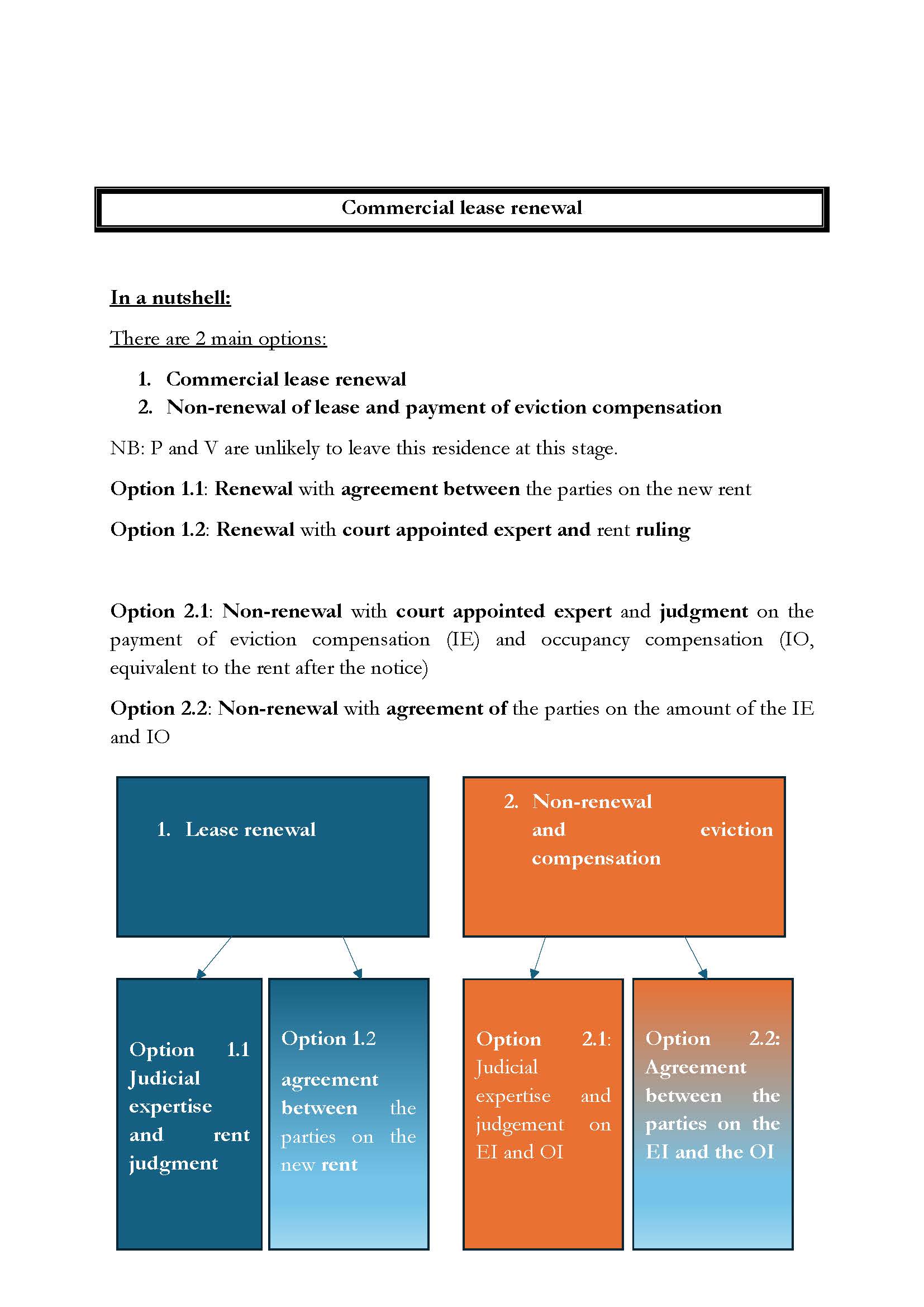
  1. Proposal for a new lower rent by the operator (tenant)
  2. Legal appraisal proposing a calculation for eviction compensation
  3. Possible amicable agreement based on the legal expert’s rent proposal
  4. Rent judge sets new commercial rent

The different stages of commercial lease renewal

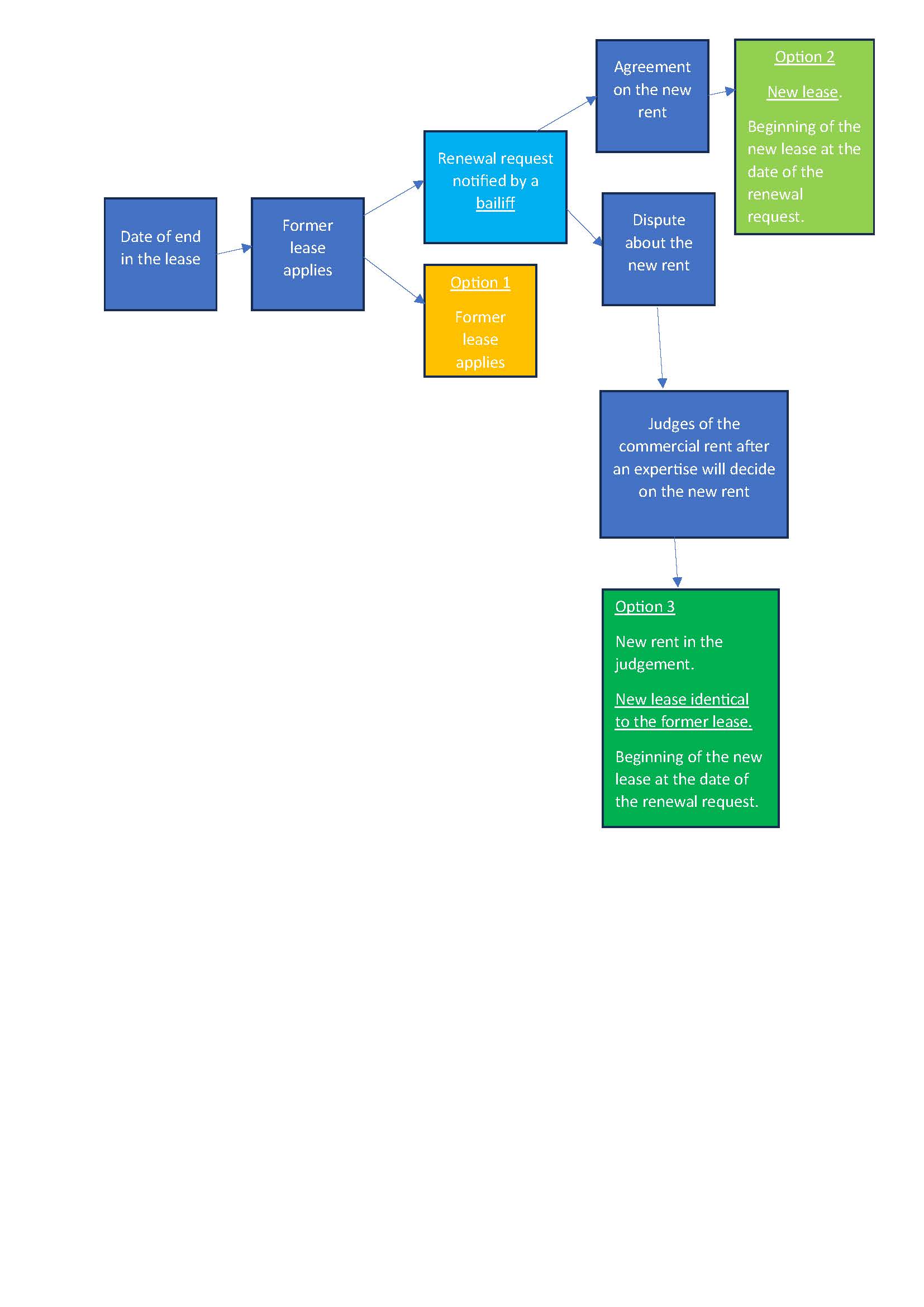
The renewal of a commercial lease is subject to certain formalities. It is not tacit, and if there is no formal renewal, the lease contract simply continues, on the basis of the initial lease. It is therefore the old lease that continues and not a new lease that takes effect. The Rent Judge sets the rent for the new lease, if the operator wishes to renew the lease contract, often with numerous rent cuts in support, and the lessor-landlord does not wish to modify the terms of the contract. A brief is sent to the lessor, usually including an amicable expert’s report to support the claim. This report is often biased and in favor of the lessee’s interests alone. You must not give too much credit to these reports. Either the operator or the lessor can refer the matter to the Rent Tribunal and request the appointment of a legal expert. The judicial expert visits the residence and calculates the rental value (the new rent). They each use different methods and different calculation procedures, based in particular on gross margins and sales (costs and revenues). The hotel method, even when adapted to student residences, is unfavorable to the lessor-owner. It’s much fairer to consider the student residence operator as a real estate administrator. The rent judge decides on the amount of the new rent on the basis of the judicial expert’s report. However, if the owner does not agree with the downward revision of the rent, he can change his mind and opt to pay the eviction indemnity.

Consequences of non-renewal differ according to the author

If the lessee simply wishes to terminate the contract, he/she must formally signify this and the obligations on both sides cease.

Payment of eviction compensation by the lessor

If the lessor decides not to renew the commercial lease, he must pay the operator an eviction indemnity. This indemnity is intended to compensate the operator for his alleged loss, even though the residence is not 100% full and an apartment will make no difference to his sales. A ruling by the French Supreme Court (Cour de Cassation) has decided that the amount of the indemnity will be calculated on the part of the goodwill represented by the apartments whose leases have not been renewed.

How can the lessor escape eviction compensation?

Eviction indemnity waiver clause

If the operator of a student residence expressly waives his right to eviction AFTER the initial commercial lease has been signed, the landlord is no longer required to pay eviction compensation.

Gross negligence justifying the absence of eviction compensation

If the tenant-operator fails to meet his contractual obligations, the non-renewal of the commercial lease will not be accompanied by the payment of eviction compensation. However, these breaches must be of a certain seriousness. The law speaks of a serious and legitimate reason. The courts require particularly serious faults, and regularly refuse to apply this requirement to repeated breaches of the commercial lease. Commercial leases for student residences have a particular feature when it comes to apportioning charges. The vast majority of these are the responsibility of the operator. As a result, failure to maintain the leased property is more likely to be cited as a serious breach of contract. The landlord must clearly state these serious reasons in the decision not to renew, which will be notified to the operator. A typical case is that of a transfer made without the lessor’s agreement, even though a clause in the contract provided for this. Systematic late payment of rent has sometimes been considered a serious reason by case law.

In another case, if the property is declared unfit for habitation by a prefectoral decision, no eviction indemnity can be demanded. If the building is rebuilt, the landlord is under no obligation to relocate the tenant. Last but not least, physical or verbal violence also constitutes grounds for non-payment of eviction compensation in the event of non-renewal by the landlord. Renting to non-students can be a serious and legitimate reason for not paying eviction compensation to the landlord.

If you have any questions, please contact us using the contact form at the bottom of the page.

Résidence de Tourisme : Successful lease renewal

nexity studea montpellier traesch lawyer

Tourist residence: The pitfalls of commercial lease renewal

When a commercial lease comes up for renewal, negotiations take place between the lessor (owner) and the operator (lessee). These often resemble blackmail rather than genuine negotiations. Some large operators simply propose a very substantial, unilateral rent reduction. The operator of a tourist or student residence will sometimes enclose a one-sided and totally biased expert report. Finally, the contact details of a law firm are sometimes included at the end of the letter, to discourage lessors from challenging the unilateral rent reduction in court. However, the judge is always more favorable than the operator who decides unilaterally.

The operator’s erroneous tax argument

Commercial leases in tourist residences offer buyers tax advantages, such as exemption from VAT, provided the property is leased for a period of 20 years, under penalty of having to reimburse the pro rata VAT for the years the apartment remains empty in this context. For example: if the lessor has rented out the property for 10 years, he must refund half the VAT; 18 years, only 2/10ths of the VAT. Operators sometimes use a false tax argument, threatening lessors with the obligation to refund 100% of VAT if the commercial lease is not renewed (in return for a drastic reduction in rent). This assertion is false. The lessor only reimburses the prorata of the years remaining on his commitment (generally 20 years), so after an initial 9-year lease and one year of tacit effect after the end of the lease, for example, 11/20 of VAT remains to be reimbursed.

Nevertheless, the total rent reduction must be calculated over the next nine years. What’s more, it leads to a sharp drop in the selling price of the apartment, which is sold at the annual yield (% of rent to selling price / year). This loss is often far greater than a hypothetical VAT refund. Not to mention the fact that the lessor operating the apartment directly will earn much higher revenues. Some lessors use platforms such as Airbnb or homelidays. Others hire local real estate agents to rent out their apartments to tourists throughout the year, depending on the season or half-season.

Tourist residences: the situation of the owner-lessor

Some heavyweights in the tourist residence sector play on this to obtain “amicably” a reduction that sometimes reaches 75%. Non-renewal would result in VAT reimbursement in addition to the absence of rental income. Operators wishing to renegotiate rents must first give notice and have 6 months in which to submit an amendment to the lease contract to the lessor. In most cases, the operator is in a position of strength, and the lessor…alone.

Renewal is not tacit. If the contract continues without renewal, the lease contract continues with the risk of the tenant’s departure. If the rent is deemed too high, the landlord can always withdraw and decide to pay the eviction indemnity within one month of the court decision.

If the owner decides not to renew the commercial lease, he is obliged to compensate the operator for the loss suffered. This is the justification for the commercial lease statute. These legal provisions protect the tenant, who is normally the weaker party in the lease contract. This is obviously not the case in tourist or student residences, where the lessor is faced with groups of property management companies. Even so, the rules are virtually the same, and the courts are only just beginning to re-establish some sort of balance on an ad hoc basis. Non-renewal with eviction compensation can nevertheless be an opportunity to increase rents if they are undervalued, or to sell at a capital gain without a commercial lease. However, the lessor must have the cash flow to advance the eviction indemnity costs before cashing in the proceeds of the sale or rentals over several years.

Alternatives for the lessor

The first option is to negotiate, with the help of an independent lawyer specializing in tourism residences. The residence manager has a legal obligation, confirmed by a ruling of the Cour de Cassation (French Supreme Court), to provide the lessor with the operating account in addition to the balance sheet, the occupancy rates of the residences and the evolution of expenditure and revenue items. This will serve as the basis for negotiations. Managers requesting a rent reduction must provide proof that this is essential for sound management.

As part of the negotiations, operators sometimes propose to “associate” lessors with the result by providing for a fixed rent accompanied by a share that fluctuates according to results. This share must necessarily be in the minority, otherwise the tax authorities will requalify the contract. Landlords can also demand a waiver of the eviction indemnity in exchange for a reduction in rent, BUT this can only be done after the new lease has been signed.

The second hypothesis is that the operator does not wish to renew the commercial lease of a residence he does not consider profitable enough. They often offer palliatives that pay a percentage of sales, with no guaranteed rent to lessors (e.g. maeva.com). In this case, of course, there is no eviction indemnity to pay. The lessor must then find a new operator, or risk having to reimburse the tax authorities for the remaining years of VAT up to the twentieth year, which is the period stipulated by law for benefiting from the tax advantages of renting out tourist residences. In recent years, a number of end-of-lease specialists have appeared on the scene, but the residence must be in an attractive location, and dishonest buyers – of which there are many – must be avoided.

The third option is to create your own operating structure to avoid VAT refunds if the property is not of interest to any operator. This option is subject to the precise conditions laid down by the law that created the tax-free property sale and rental scheme.

  1. Do not sign the first commercial lease renewal proposal sent by the operator of the tourist residence.
  2. Ask a tourist residence lawyer a free question.
  3. Take time to reflect on the right strategy, so as not to lose your assets by following the wrong legal and tax advice.
  4. Join a tourist home lessor group

If you have any questions, please contact us using the contact form at the bottom of the page.

Loopholes and pitfalls of a commercial leaseback

Loopholes and pitfalls of a commercial leaseback

Advice on commercial leases

Analysis of draft commercial lease BEFORE signature

The drafting of a commercial lease gives the parties considerable freedom to organize their contractual relationship. It is ESSENTIAL to have any lease or legal document analyzed by a professional legal expert, such as a lawyer, BEFORE signing it, to ensure a long-lasting and fruitful business relationship.

Drafting clauses for commercial leases

Our lawyers draft commercial leases and analyze the legal effects of our customers’ commercial lease clauses.

Representation in commercial lease matters

Unpaid rent on commercial leases

Our lawyers can also provide fast and effective responses to unpaid rents, whether in eviction proceedings or in drafting letters of formal notice.

Our expertise in commercial leases is reinforced by our representation of our clients in legal proceedings, pre-litigation negotiations and advice on the drafting and management of commercial leases. Our fees are all-inclusive and set out in full in an engagement letter/fee agreement signed with our clients. The predictability and control of fixed costs is an advantage appreciated by our customers. Our clients are owner-operator companies, commercial leaseholders and owners of businesses to be managed and sold.

If you have any questions, please contact us using the contact form at the bottom of the page.

Leaseback: breach of contract

Leaseback breach of contract traesch lawyer

In the judgment handed down by the Versailles Court of Appeal on 18 December 2018, the main issue is compliance with the tenant’s financial and contractual obligations, in particular the regular payment of rent.

Unpaid rents

The lessor (landlord) has initiated proceedings due to breaches by the tenant, such as late or unpaid rent. The landlord relied on the clauses of the lease, including the resolutory clause, to request termination of the contract in the event of serious breaches. The Court also considered whether these breaches were significant enough to justify termination.

In its arguments, the landlord emphasised that compliance with the terms of the lease was essential to guarantee the economic equilibrium of the property development, in particular the timely payment of rent. Failure to comply with these obligations jeopardises the proper performance of the contract and causes financial loss.

Indexation clause

The lessor also argues that the clauses relating to indexation or rent review must be applied strictly in accordance with the contractual terms and the legal provisions in force.

In addition, the formal notice or order to pay procedure was put forward to justify the landlord’s good faith in taking steps before requesting termination. The Court therefore examined whether the lessor had correctly followed the legal procedure before seeking to terminate the lease.

The decision of the Versailles Court of Appeal, handed down by the 12th Chamber on
18 December 2018 (RG 17/01944), deals with an issue relating to a commercial lease and addresses several crucial points in commercial lease law.

In this case, the central issue concerns the performance of the contractual obligations associated with the commercial lease, in particular the financial terms, such as the payment of rent, as well as the tenant’s compliance with the customs of the property. The dispute is based in part on differing interpretations of the clauses of the lease agreement, particularly with regard to the procedures for reviewing or adjusting the rent, as well as alleged breaches by the lessee (tenant) of his obligations.

The ruling emphasises the need for both parties, lessor and lessee, to comply scrupulously with the contractual provisions as set out in the lease. This includes not only the regular payment of rent, but also the continued use of the premises in accordance with the purpose specified in the contract. In addition, the issue of non-payment of rent or other irregularities may give rise to proceedings to terminate the lease, subject to the existence of a resolutory clause.

The Court also examines the circumstances in which termination of the lease may be ordered. In this case, it analysed whether the breaches of which the tenant was accused were sufficiently serious to justify termination and whether the legal procedures, such as the issuing of orders to pay or other formal notices, had been properly complied with by the landlord.

One of the issues addressed also concerned the adjustment of rent, whether through the indexation clause or the three-yearly review. The Court of Appeal pointed out that these mechanisms, although legal, must be applied in strict compliance with the provisions of the law and the agreements, failing which they could be deemed abusive or inapplicable.

The issue of good faith in the performance of the contract is also highlighted. The Civil Code requires contracts to be performed in good faith. This means that both parties must not only respect their contractual obligations, but also act loyally and cooperatively in fulfilling the contract. Any attempt to circumvent or abuse a contractual term may be sanctioned by the courts.

In conclusion, this ruling illustrates the fundamental principles of commercial lease law, such as compliance with contractual obligations, the need for performance in good faith and the strict conditions under which termination may be ordered.
It also reiterates the importance of the parties fully understanding and negotiating the terms of their contract in order to avoid costly disputes and preserve a balanced rental relationship.
Finally, the landlord invoked the need for the tenant to perform the contract in good faith, in accordance with the provisions of the Civil Code.
In the landlord’s view, any serious breach of essential obligations, such as the payment of rent, constitutes a legitimate reason for terminating the lease and vacating the premises.

If you have any questions, please contact us using the contact form at the bottom of the page.

French Leaseback: Renewal of the lease

French Leaseback Renewal of the lease traesch lawyer

When it comes to commercial leases for tourist residences, the situation at the time of renewal of the lease at the end of the first nine years is of strategic importance to the lessor. Tourist residences are generally governed by standard commercial leases, with special features relating to tourist operations.
Here is an overview of the various options available to the lessor at the time of renewal:


1. Renewal of a commercial lease

The default commercial lease is for nine years, but it can be renewed under certain conditions. The lessor is obliged to offer a renewal under the conditions set out in the Commercial Leases Act (articles L. 145-1 et seq. of the French Commercial Code). To this end, he must notify the tenant of an offer to renew six months before the end of the lease, or failing that, respond to the tenant’s request for renewal. Renewal is not automatic, but is in principle a right of the tenant, unless the lessor can give a legitimate reason for refusing.a. Renewed rentThe rent for a renewed lease must be set on the basis of the rental value, subject to a ceiling that may be exceeded in certain circumstances, in particular in the event of a significant change in local market factors or in the event of a contractual de-capping clause in the lease.

2. Refusal to renew with eviction compensation

If the lessor does not wish to renew the lease, he may refuse to do so. However, this refusal is accompanied, with certain exceptions, by an obligation for the lessor to pay the lessee an eviction indemnity (article L. 145-14 of the French Commercial Code). This indemnity is intended to compensate for the loss of a business, and its amount may include, among other things, the value of the business, moving and relocation costs, or even an indemnity to compensate for the loss of goodwill.

3. Refusal to renew without eviction compensation

In certain situations, the lessor may refuse to renew the lease without being required to pay eviction compensation. These situations includeSerious misconduct on the part of the tenant (non-payment of rent, serious breaches of lease obligations, etc.).repossession of the property to sell it for residential use, where the building is used for both residential and commercial purposes.Demolition of the building as part of a reconstruction project on grounds of insalubrity or dilapidation.However, these reasons must be properly justified and regulated by lawto avoid any disputes.

4. Rent review on renewal

At the time of renewal, the lessor may also ask for the rent to berent review. As mentioned above, the rent for a renewed lease is, in principlesubject to a ceiling, unless there has been a significant change in the localhas occurred since the initial lease was signed.initial lease. In this case, the rent may be removed from the ceiling and set at themarket rental value.

5. Negotiation of new contractual terms

At the time of renewal, it is also possible for the lessor torenegotiate certain clauses of the lease, such as those relating to durationrental charges, or maintenance and upkeep obligations.maintenance obligations. However, these negotiations must comply withpublic policy provisions relating to commercial leases.

Conclusion

The renewal of a commercial lease in a tourist residenceis a strategic step for the lessor, who must decide betweenthe interest in continuing the rental relationship or recovering the property,while taking into account legal and contractual obligations.Each option – whether renewal, refusal with or withoutwith or without eviction compensation, or rent review – has legal and financiallegal and financial implications that need to be carefullyto optimise management of the property.


Vacanceole Provence French Leaseback

Eviction of a Tenant under the French Law traesch lawyer
Vacanceole: Provence Eviction of a Tenant

Vacanceole Provence operated a ‘Clos Dia’ tourist residence in Tourrettes

The lessors entered into commercial leases with Vacanceole Provence for the operation of a tourist residence.

Vacanceole Provence: Collective action of 70 owners in French leaseback

A group of 70 lessors seized the property and gave the operator notice to recover their property.

Interim injunction issued by the Draguignan Magistrates’ Court on 9 October 2024

The interim order issued by the Draguignan judicial court on 9 October 2024 in the referenced case concerns a dispute over a commercial lease.

The plaintiffs, various owners of lots located in the ‘Clos Dia’ residence in Tourrettes, entered into commercial leases with the Vacancéole Provence company for the operation of a tourist residence. The agreed rent was 300,000 euros per annum, plus a 40% share of operating profits. The lessors criticised the lessee company for failing to pay certain rents, because the rents were not indexed.

Unpaid rents linked to the failure of Vacanceole Provence to index rents annually

As a result of unpaid rent linked to the failure of the operator of the tourist residence to index the rent each year and the refusal to renew several leases, the owners applied to the interim relief judge to declare the acquisition of the resolutory clause in the lease contracts and order the eviction of the tenant company. They also requested that the company be ordered to pay unpaid rent for the lack of annual indexation.

In its defence, SASU Vacancéole Provence contested the service of the summons to pay and the notice to quit. It raised objections of nullity due to the failure to provide supporting documents. In the alternative, it asked for time to pay and made counterclaims, in particular claiming compensation for eviction.

Dismissal of the application to set aside the notices of termination

The court examined the procedural objections raised by the tenant company. It pointed out that the interim relief judge cannot declare bailiff’s documents null and void, but can only verify whether there are serious disputes. In this case, the summons to pay and the notice to vacate were in fact mentioned in the list of documents, and the tenant company had not demonstrated any grievance caused by this alleged irregularity.

With regard to the substantive claims, the court analysed the provisions of Articles L.145-14 and L.145-28 of the French Commercial Code, which set out the rights of tenants in the event of a refusal to renew a lease and in the event of eviction compensation. The court considered that, on the basis of the evidence presented, an expert appraisal was required to assess the eviction compensation potentially due. Theexpert opinion was therefore ordered, at the advanced expense of the lessors, as is customary.

Application for termination without eviction compensation based on resolutory clauses in the leases

With regard to the termination clauses in the leases, the court referred to the provisions of article L.145-41 of the French Commercial Code. It noted that the payment orders issued were valid, but that the sums claimed did not, in its view, justify a sufficiently precise breakdown. However, a table showing updates by year was appended to the summons to pay issued by the bailiff. It is likely that the interim judge did not intend to take responsibility for terminating certain commercial leases for failure to index the rent annually.

As a result, the claim remained disputable according to the interim relief judge, and the court rejected the applications to acquire the termination clauses (resolutory clauses) and the requested evictions. In addition, the applications for an advance on index-linked rents were also rejected on the grounds that they were seriously disputed.

Vacanceole Provence Counterclaims

Finally, the court rejected Vacanceole Provence’s counterclaims for lack of sufficient evidence. It also ruled that there were no grounds for interim relief in respect of the landlords’ claims.

In conclusion, the court ordered a legal expert to assess the eviction compensation, but rejected the parties’ other claims.

Waiver of the eviction damages in the lease written by the lessee

Vacanceole Provence has chosen to refuse to enforce the waiver of the eviction compensation in the lease written by the former lessee. The owners have agreed to renew the last lease only because this waiver was included in the new lease. Such a bad faith is based on a change of case law of the French high court (Cour de cassation), especially if the waiver is in the lease and not in another document following the lease.

The british press was right to critize the bad faith of the operator (tenant/lessee) of the French leaseback property.

If you have any questions, please contact us using the contact form here.

ASK YOUR QUESTION (FREE) - RESPONSE WITHIN A BUSINESS DAY

We will respond to all e-mail contacts within a business day. We Make French Law Understandable. The answer to your question will be written only by a partner of our law firm.