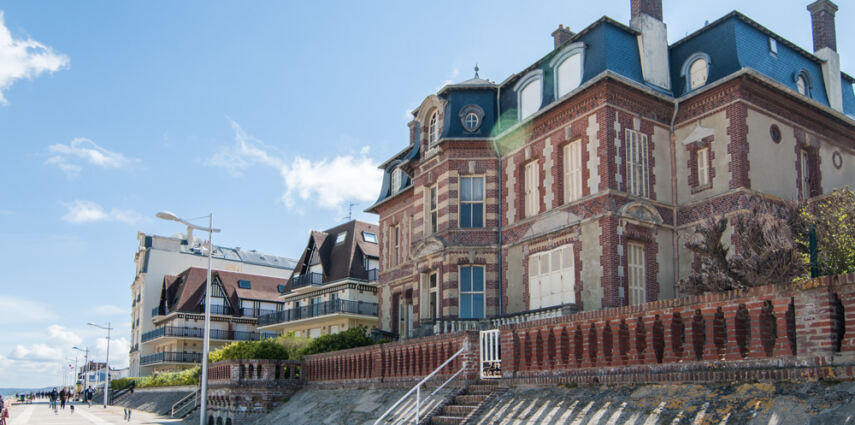
Nexity Studea Clichy Eviction damages

leaseback

Total eviction compensation of €15,549

Nexity Studea the tenant operating the student residence in the parisian suburb Clichy was asking for eviction damages after the refusal of the renewal of the lease by the owner. This claim is based on on French code of commerce, even if the owner was never informed in the contract.

The first step is to ask the court to appoint an expert to calculate the evictions costs for the owner. After the expertal report, it is often possible to reach an agreement with the tenant.

Concerning an apartment in the Nexity Studea Clichy residence, the court apointed expert’s report proposes the following amounts for eviction compensation and ancillary compensation:

“The main compensation is set at €12,673 (twelve thousand six hundred and seventy-three euros).

The ancillary compensation is set at €2,878 (two thousand eight hundred and seventy-eight euros)

For a total of €15,549 (Fifteen thousand five hundred and forty-nine euros)”.

Nexity Studea’s qualification as a student residence

The residence is a student residence and not a service or tourist residence, as Nexity Studea claims.

A student residence has very few fixed costs, and is more akin to a property management business than a hotel. Leases are annual, and very few staff are dedicated to the residence, and almost none are full-time. Nexity employees work on several residences at the same time.

The operator’s name is Nexity Studea, studea referring to the English verb “to study”.

Nexity Studea operates a student residence, which it is expected to rent to students.

This qualification is important, hence Nexity‘s attempt to pass off a student residence as a tourist residence.

Jurisprudence/Case Law has established the methods and prejudices to be ruled out in matters of eviction compensation for a student residence, and still qualifies Nexity Studea residences as student residences.

The turnover method in student residences like Nexity Studea

Following the case law, the expert applies the turnover method, but at coefficients much lower than the coefficient 4 requested by NEXITY, which applies to hotels and not student residences.

The Versailles Court of Appeal upheld the judgment of the Nanterre Court, which applied a coefficient of 1.75 to average annual sales in NEXITY STUDEA student residences:

“The commercial lease covers an apartment and a parking lot in a student residence with 110 lots. The sales method should be applied, as for a property manager, with a coefficient of 1.75 applied to average annual sales.

(Versailles Court of Appeal, 12th Chamber, May 29, 2018, 17/02845, JurisData number: 2018-009760, summary)

The Versailles Court of Appeal has upheld the judgment of the Nanterre Regional Court, which applies a coefficient of 2 to average annual sales over three years, before applying the median with EBITDA, in the NEXITY STUDEA student residence in Issy-Les-Moulineaux :

“Calculating the capitalization by the average sales over the same three years of the three disputed lots, the expert concluded to an average sales excluding VAT of 7,823 euros, to which he assigned a coefficient of 2,

In view of the specific nature of serviced residences and the lack of precedent enabling a method of proven relevance to be adopted, the median retained by the expert between restated EBITDA and average sales will be validated by the court.

(CA Versailles, 20-06-2017, n° 12/05809)

The Paris Court of Appeal confirmed the experts’ choice of a coefficient of 1.75 for average annual sales in student residences: “Concerning the valuation of the main eviction indemnity, the method used for furnished hotels is not appropriate.  In a student residence, the majority of sales are generated by rents, the payroll is very small and the studios are rented to students on a year-round basis.  The average of two methods should be used, as was done by the legal experts: the sales method, assessed as for a property manager, with the application of a coefficient of 1.75 to average annual sales”.

Paris Court of Appeal, Pôle 5, Chamber 3, May 2, 2018, No. 16/04691, JurisData number: 2018-007308

On the same date, the Paris Court of Appeal issued another ruling along the same lines.

(Cour d’appel de Paris, Pôle 5, chambre 3, 2 mai 2018, 16/10156, numéro JurisData : 2018-007141)

In this case, the location of the student residence Nexity Studea in Clichy-la-Garenne cannot lead to a coefficient of average sales higher than 1.75.

Please feel free to ask us any question.

Leaseback unpaid rents: Pierre et Vacances convicted to 845,549 €

Leaseback Property

Leaseback Property : Adagio Paris Tour Eiffel  (rue du théâtre)

Adagio residences are operated by a company of the Pierre et Vacances group, PV CP CITY. The Adagio brand belongs to Pierre et Vacances and the ACCOR group.

A procedure initiated by 31 lessors

Pierre et Vacances (PV CP CITY) was ordered on March 22, 2023 by the Paris judicial court to pay 848,649 euros to 31 lessors (845,549 euros in unpaid rent and 3100 euros in article 700 CPC) of the Adagio Paris Tour Eiffel residence.

The case law of the Cour de Cassation (Supreme/High Court) of 2022

The 18th civil division of the judicial court dismissed Pierre et Vacances/PV CP CITY’s arguments in accordance with the case law of the Court of Cassation of June 2022.

Rejection of the exception of non-performance based on an alleged breach of the lessor’s obligation to deliver and force majeure

The exception of non-performance and force majeure were rightly rejected, in view of the positive law established by the Court of Cassation.

State guaranteed loans (PGE) and public subsidies for Pierre et Vacances

Finally, the court noted the significant public subsidies from which the group of leaseback properties benefited.

The operator favors its shareholders over its lessors, despite the public aid it receives:
“Rent expense is almost stable compared to the previous year (up 3 million) renewal of leases (20 million euros) being offset by rent savings in discussions with the Group’s lesser lessors than those recorded in the previous year (47 million euros in FY 2021 vs. nearly 70 million euros in FY 2020).
Rental savings in FY 2021 are in fact limited to :
– to net savings from the application of the endorsements signed by 59.3% of individual lessors as of September 30, 2021 (deductible equivalent to 7.5 months’ rent, including 5 months’ rent in respect of FY 2021, i.e. a saving for the Group of around €29 million over the year, largely offset by a charge of €28 million corresponding to the face value of the vouchers allocated to the signatories of the endorsement).

7 million relating to suspended rents to non-signatory lessors for periods of administrative closure during which the Group considers, on the legal basis of the exception of non-performance or on the basis of the provisions of Article 1722 of the Civil Code, that the rent debt is extinguished.
– net savings from the application of agreements with institutional lessors, representing an amount of approximately 39 million euro for FY 2021 (deductibles / rent variabilization with guaranteed minimums, net of provisioning of rents under financial recovery clauses).

The 2019/2020 fiscal year recorded rental savings of nearly 70 million euros (30 million euros for rents from individual lessors suspended during the administrative closure period and 40 million euros for agreements negotiated with institutional lessors).”
(Brochure_of_AGM March 31, 2022, page 8)
“The rental debt to non-signatory lessors relating to the administrative closure periods has been extinguished in the accounts of the lessee companies, the Group basing its assessment on the legal basis of the exception of non-performance and on the provisions of Article 1722 of the Civil Code. Accordingly, no liability has been recognized in this respect as of September 30, 2021.
This position has been validated by the Group’s auditors.

– What are the texts, decrees or administrative regulations referred to under the term “administrative closure” used on page 15 of the notice of meeting, in respect of the period considered “mid-March to end of May and November to mid-December 2020”?
The texts applicable to the period from “mid-March to the end of May and November to mid-December 2020” are the following
Ministerial orders of March 14 and 15, 2020 and decree n°2020-293 of March 23, 2020
– Decree n°2020-548 of May 11, 2020, modified by decree n°2020-604 of May 20, 2020
– Decree n°2020-1310 of October 29, 2020
Debts due in respect of all unpaid rents to non-signatory individual lessors for the period from January 1 to June 30, 2021 are recorded as liabilities (under trade payables in the Group’s parent company and consolidated financial statements) in an amount of approximately 32 million euros as of September 30, 2021.
As of today, these same liabilities represent only 16 million euro, the share of non-signatory lessors having been halved compared to September 30, 2021. The suspended rents for the other so-called interim periods (periods between administrative closures) have also been settled in full.
The Group, with the support of its legal advisors, considers that the rental debt relating to the administrative closure periods has been extinguished. The Group relies on the following legal bases:
– The exception of non-performance due to the breach of the obligation of peaceful enjoyment (articles 1219 and 1719 of the Civil Code); and
– The basis of the partial destruction (loss) of the premises (Article 1722 of the Civil Code).
Consequently, no provision has been recorded in the Group’s consolidated financial statements in this respect.
 (Answers of the Board of Directors to written questions from shareholders, combined general meeting of March 31, 2022)

Statutory Auditors’ Report of September 30, 2021

The auditors’ report of September 30, 2021 specifies the existence of a debt-to-equity conversion in the amount of 551 million € and “maintenance of a portion of the EMP in the amount of 25 million“.

[learn_more caption=”PGE converted into capital”] The PIERRE ET VACANCES group will therefore not be forced to repay 215 million € of the 240 million € of the first state guaranteed loans [/learn_more].

The new and second state guaranteed loans of 34.5 million €

The PIERRE ET VACANCES group benefits from a new and second state guaranteed loans in the amount of 34.5 million euros.
 (Statutory auditors’ report of September 30, 2021, pages 17, 19 and 43)

The “closing” aid

The operator obtained so-called “closure” aid from the State in the amount of 24 million € and “aimed at compensating for the uncovered fixed costs of companies whose business is particularly affected by the Covid 19 epidemic.”
 (Auditors’ report of September 30, 2021, page 44)

Refusal to sign agreements unfavorable to lessors under the pressure of pseudo-conciliation before the commercial court

The operator intends to make lessors pay for its operating risks, although it is not sharing the booming profits from the record years of tourism in Paris in 2018 and 2019 with its “investors,” the individual lessors.

The operator tried to get the lessors to sign a rider acknowledging that they had breached their delivery obligation in exchange for non-existent concessions such as the payment of rent for subsequent quarters.

Lessors can congratulate themselves for not giving in to pressure and untruths.

French Leaseback Problems (rents, eviction compensation)

French Leaseback Problems (rents, eviction compensation) traesch lawyer

The pitfalls of tourism residence investment

Investment in French Leaseback Properties seems attractive

Why talking about French leaseback problems ? Because there are a lot !

The buyer benefits of several tax breaks by the French government. At this stage, what the real estate agent promised comes true.

The private investor doesn’t has to bother about the furnishing of the flat. He or she doesn’t have to manage the rent of the apartment.

Better, the operator guarantees the payment of attractive rents not depending on the real occupancy of the apartment. The operator pays the rent even if the flat is empty. It last for the nine years of the lease contract (or should).

However, the lease contract is here a commercial lease, which follows specific rules under the French law. This set of rules applies for businesses. It protect the lessee and the stability of the businesses. It wasn’t designed for private investor, with no knowledge of the French law.

Unfortunately, the commercial lease protects a very long term relationship, ie 9 years and usually 18 years.

But a lot of owners have to face legal issues. The profitability promised when signing the contract disappeared.

Late payments and unpaid rent

On paper, an investment in a leaseback has everything to please: tax reduction, return of VAT, full discharge of rental management and perspective, often too much vaunted, to achieve a good profitability.

But some owners are quickly disappointed. Nobody told you about french leaseback default. They often have the unpleasant surprise of meeting all sorts of difficulties in the payment of their rents: recurring delays going up to the unpaid rent for months or years. Risks that seriously change the attractiveness of investment. The investor should know about the French leaseback problems.

Some managers prefer to control their cash flow to the respect of their contractual duties. Owners find themselves having constantly to claim their rents. That’s why so many articles talk about French leaseback problems or even French leaseback scandal.

In addition, owners can not afford such flexibility with the payment of monthly mortgage loan. Too much delay in payment may lead the lending banks to demand full and direct repayment of the loan. It sometimes put the owners in great financial embarrassment. That’s another big French leaseback problem.

In case of unpaid rent, the owner must act quickly if he wants to recover his arrears of rent.

Lawyer and bailif

At this stage, a simple email/letter isn’t enough. You have to move quickly to the next step. The owner will have to send a “command to pay” (CDP), by bailiff, for the cancellation clause of the lease contract. The official warning will mention that the tenant has a period of one month to pay the rent.

Following the lease term, the landlord/lessor has the right to terminate the contract, after one month. The landlord then has the option to fill a case in court and to request the eviction of the operator.

This threat may be enough to motivate the unscrupulous tenant to pay his unpaid rents promptly. If it does not run, the operator is liable to pay unpaid rent, but also legal fees (bailiff and lawyer), and possibly an occupancy allowance.

Big repairs and refurbishing at the expense of the lessor (owner)

After 9 years, the cost of the repairs is among the first unpleasant surprises of the investor in French leaseback scheme.

Indeed, it is common that during commercial lease, the operator asks for renovation of all the apartments. The bill can then rise to a year and a half of rent. One of the many French leaseback problems for the owners.

Before investing, the buyer should assess the quality of the apartment he is about to buy. He has to check the extent of any repairs to be done. Of course, nobody told you that. They were insisting on a financial and government secure investment.

General expenses of the building are first paid by the operator. The managing company is usually a company of the same group. After 9 years (and a change in the French law), the operating company refuses to pay general expenses of the building. The operator is even pretending the cleaning staff paid by the owners is not cleaning the rooms but only the commons.

Renegotiation of rent imposed by the operator

At the renewal of the commercial lease, the operator of the residence often seek to revise the amount of rents downwards. Economic conditions and competition are among the most cited reasons for this decreased rent. It is usally the first time you hear about “bail commercial” (commercial lease in France).

Some operators receive an amount paid by the Promoter to purchase the building, whereby they artificially inflate the rents during the first nine years of the Commercial lease.

They know that after 9 years a set of rules will force the renegotiation of the rent and finally the decrease.

These rents do not reflect the state of the local rental market at the time the commercial lease is concluded (i.e. they are very high). Here starts the french leaseback scandal.

It is very likely that the operator will ask to renegotiate a drastically lower amount to renew the commercial lease.

Even if the owner is free to refuse a lower rent, the trap closes when he realizes that he could lose his tax return. And that he will pay the general expenses and the rental management alone if his apartment is not operated by another operator. It is not 100% like that, but usually the owner doesn’t ask for legal counsel of a real french leaseback lawyer.

To get out of this slump, the owner may decide to sell his property.

Eviction compensation/damages

Eviction damages are due by the owner who hasn’t agreed to renew the commercial lease. Usually, owners of a French leaseback never heard about such an legal issue.

Owners issues are described in a lot of newspaper articles.

Resale of the leaseback property might be difficult

However, the government agrees to a 100% VAT refund only if the flat is rented during 20 years.

If not, the owner has to refund to the tax authorities the VAT to run until the 20th year. For example, if it is after 9 years: 9/20 of the tax return.

This fact, weighs heavily in the balance at the renegotiation of rent. The owner is torn between the significant decline in the amount of rental income decreasing the gains of a possible resale of his apartment and the loss of tax benefits.

But the most significant issue is the eviction compensation. It is up to several thousands of euros for a simple flat. The owners don’t to pay the tenant, who is refusing to continue the lease at the same rent.

That’s why you can read about French leaseback scandal or french leaseback nightmare ! The french leaseback forums are full of testimonies of French leaseback problems. Irish owners even wrote a french leaseback petition to the European union commission in Bruxelles.

Irish owners even wrote a french leaseback petition to the European union commission in Bruxelles.

You have to find the right french lawyer to fight for you in french courts !

Please feel free to ask us a written question!

French Leaseback : Termination of the lease without damages (indemnité d’éviction)

French Leaseback : Termination of the lease without damages (indemnité d'éviction) traesch lawyer

Leaseback Properties Contract written with wilful misrepresentation (indemnite d’eviction)

Leaseback properties in France. Private individuals agreed to a leaseback scheme in France (buying and renting to an operating company)

Summary

  • The operator (tenant) waives the eviction compensation in the commercial lease, knowing that this waiver is not valid (not enforceable).
  • The judges cancel the lease. The operator of the French leaseback property (tourist residence) is not entitled to an eviction indemnity (damages called in French : indemnité d’éviction).
  • The bad faith of the tenant, who drafted the commercial lease turns against him.
  • This case law could be a huge step forward in the right of owners of a French leaseback property.

Abstract

The (tenant) lessee, is a company specialized in the management of leaseback properties.

However, the operator writes the lease with bad faith. Because he pretends to waive in advance his right to damages, if the the lessor end the contract. (eviction indemnity/(damages called in French : indemnité d’éviction).

According to the French law, the tenant (lessee) cannot waive in advance and in the lease his right to an eviction indemnity in case of non-renewal of the commercial lease.

He can waive this right to damages AFTER signing the commercial lease.

But in this case, the operator is a pro of this industry. He waives his right knowing well that this clause has without legal ground. Even if, it was for the lessor a substantial condition of the contract, ie one main reason why the buyer agreed to the leaseback.

The tenant (operator) acted with the intention to willfully misrepresented the content of the lease contract.

The operator of the leaseback property falsely reassured the buyer/lessor in the legitimate belief that his renunciation constituted a real commitment.

This behavior is analyzed as a “wilful misrepresentation” (dol in French), meaning a fraud when writing the contract.

Wilful misrepresentation and statute of limitations

Wilful misrepresentation

The buyer of the French leaseback property signed a leaseback contract with a operating company. However only the tenant wrote the lease contract.

The waiver to an eviction indemnity could only appear as a decisive element of the deal. Most importantly, the buyer of the French leaseback would (or might) not have signed the contract.

If their attention had not been attracted by this financial interest, they might not have contracted.

Indeed, the cost of more than € 13,000 claimed as compensation for eviction weakened the profitability of the operation for the owners.

The legitimate belief in a waiver of the lessee  continued throughout the lease. They served a notice without eviction compensation. It was served in accordance with paragraph 6 of the lease.

Statute of limitations of 2 years

Otherwise, the tenant is claiming a statute of limitation of 2 years to cancel the lease. However, the statute of limitation of 2 years begin to run, when the victim is informed. In this case, it is the date of the registered mail addressed to the  owners by the operating company.

That’s why the wilful misrepresentation (fraud) leads the judges to cancel the commercial lease.

Furthermore, the court decides the paid rents were due for operating the leaseback property without a lease contract. The cancellation of the lease means it is like it had never existed.

Cour d’appel de Montpellier, 10 janvier 2017, N° de RG: 14/06714

Mistakes to avoid when buying in a student residence

unpaid rent french leaseback traesch lawyer in France

Pitfalls to avoid when buying property in a student residence

What mistakes to avoid before buying in France ?

BE ON THE ALERT: Don’t be blinded by the tax benefits

1. The mirage of the “guaranteed” financial investment “without risk”

You are not buying a “financial product” – a “guaranteed investment without risk”. The selling point of “tax exemption” in France should not make you forget that it is a PROPERTY PURCHASE carried out by YOU ONLY. It is the only version of reality which will appear on the contracts and legal documents you sign in France.

The fact that you neither created the documents, nor signed them in person, nor even saw the property is no excuse under French law (actually this is similar to the laws in most countries).

2. Buying property that is much too expensive in medium-sized towns

A common mistakes is believing that the law will protect you against loss incurred when buying such property in France. The tax benefit should not lead to the purchase of a property that will be unsellable (and sometimes hard to rent) in the future.

3. Buying  in a student residence without checking the number of students and the local market

You should invest in a student residence in cities with a strong university potential (Lyon, Bordeaux, Lille, Marseille, Nice or Montpellier) to ensure an occupancy rate that is high enough for the operating leaseholder and the lessor who will be paid only if the company makes a profit. Beware of investments in medium-sized towns already jammed with housing where the developer who approaches you is offering hundreds of accommodations in addition to yours.

4. Don’t invest in a student residence which is badly located even in a City full of students

Despite all the “guarantees” offered by the sales representative who approaches you, you must not forget the golden rule of property purchase: LOCATION, LOCATION, LOCATION.

THREE TIPS TO AVOID MISTAKES

  • Enquire about the rental market (existing studies) and the schools and universities in the proposed town/city,
  • Check the exact location of the accommodation (using googlemap, google earth or mappy, for example) to avoid buying property that is too far from the main schools.
  • Involve local experts, who know the market. We can help.

RISKS

  • Frequent and recurring risk of unpaid rents (for several years sometimes)
  • Attempts by the company that holds the lease to renegotiate a lower rent
  • Capital loss on the property’s sale, including after 10 years (!)
  • Bankruptcy of the company that holds the lease
  • Substantial work to be funded after ten years or so, despite low rental income

PLEASE FEEL FREE TO ASK YOUR QUESTION (FREE OF CHARGE)

We believe in LOW COST and CLIENT ORIENTED legal services in France for English speaking customers.

WHO ARE WE ?

  • Lawyers members of the Paris Bar since 10 and 13 years
  • English-speaking lawyers (we used to live in Sydney and we love to travel)
  • Doing Business mainly in Paris and on the French Riviera but able to represent you all over the country

WHY US ?

  • We know what it feel like to be a “foreigner” and not understand a word of the situation
  • We answer our phones (and phone calls/skype are free!)
  • We are small : you case will be taking care of by one the main partner

Me Bruno Traesch on radio FRANCE BLEU:

http://www.francebleu.fr/emissions/les-experts-france-bleu-107-1/maitre-bruno-traesch-expert-en-droit-de-l-immobilier

Related Articles :

How to Get Out of a Commercial Lease in France?

How to Get Out of a Commercial Lease in France traesch lawyer

Ending a commercial lease early under the French Law

How should I terminate a commercial lease in France?

Under the French law, the termination of a commercial lease has to follow several legal rules in order to be enforced by a court.

HOW ?

The rules of the notification of the termination are very technical and specific. We strongly advise that you have our legal counsel for this process.

TERMINATION BY A BAILIFF

Under the French law, notice must be given by a bailiff (article L. 145-9 of the French commercial code).

Our firm can hire a bailiff and follow his work for you.

WHEN ?

At the end of the lease (common commercial lease lasts 9 years) and anytime after the first 9 years if you haven’t signed a new lease yet.

You cannot terminate a lease during the first 9 years.

Exceptions : You are allow to terminate the lease before the first 9 years if your tenant has not followed the contract (e.g. not paying rent or breaching any clause of the lease).

The landlord/lessor has to give a 6 months notice period in any case.

HOW MUCH ?

You will have to pay damages (“indemnité d’éviction”) to your tenant if you decide to terminate the lease (not applicable if your tenant breached the lease).

You may also read:

Contract with the French real estate agent

real estate agent

FRENCH REAL ESTATE CONTRACT

MISTAKES WHEN HIRING A FRENCH REAL ESTATE AGENT</strong>

Be certain to completely understand the real estate agent</strong> fees. For example, is it a fixed price contract, or based upon a percentage of the sale ?

WATCH OUT FOR OVER-QUOTES TO WIN THE CONTRACT

The initial selling price quoted by the real estate agent</strong> is often optimistic, in order to gain your business.

It is likely that your property will be sold at a lower price and we recommend that you agree to a percentage (vs. fixed fee) contract with the agent.

PITFALLS WHEN SIGNING WITH AN AGENT IN FRANCE

Legal rules applying to an exclusive agreement signed with a rget=”_blank” rel=”noopener noreferrer”>real estate agent</a>:

  • A 3 months contract with 15 days notice,
  • If you sell the property yourself during the exclusive contract period, you are likely to be subject to paying all or most of the agent’s fees anyway (100 % or sometimes 50 % (Subject to the Contract).

You could be tied to a real estate agent</strong>, even if you want to terminate this contract.

A non exclusive agreement

If the real estate agent seems to be trustworthy, just sign a <strong>non exclusive agreement with the reaagent.

ADVICE

A word of Advice

  • Don’t sign anything before obtaining qualified legal guidance
  • Hire a lawyer in France to review the contract (approx. cost: 200 euros).

Worst scenario: the exclusive agreement was a bad idea

Sometimes, the sale of the house/apartment is locked in an exclusive agreement (“mandat exclusif”), even if the real estate agent in France is not looking for new clients.

In some cases, the real estate agent</strong> in France will advise you after few weeks/months to lower the price</a>.</strong></p>

Two possible reasons:

  1. The French real estate</strong> agent wants to quickly sell the property without too much effort,
  2. The quote was way above the market (in order to win your contract).

Ask your question to our English-speaking lawyers in France (free)

ASK YOUR QUESTION (FREE) - RESPONSE WITHIN A BUSINESS DAY

We will respond to all e-mail contacts within a business day. We Make French Law Understandable. The answer to your question will be written only by a partner of our law firm.