Press release and judgments of the Cour de cassation of 30 June 2022

pay the eviction traesch lawyer

A victory for commercial lessors

The Court of Cassation has confirmed what the lawyers for lessors of tourist residences had been arguing for, except of course for those who had advised their clients to waive their rent claims. Operators of tourist residences must pay Covid rent in full.

Lessors of tourist and student residences (and in particular Pierre et Vacances, Residetudes, Belambra, etc.) can rejoice: the Cour de cassation has rejected all the operators’ arguments concerning Covid rents!

Positive law in this area rejects breach of the obligation to deliver and the exception of non-performance, as well as force majeure and partial loss of the property, which are inapplicable in this case.

The Court of Cassation’s rejection of the lessee’s arguments (force majeure, obligation to deliver, partial loss of the property)

On 30 June 2022, the Cour de cassation handed down two rulings confirming the positive law rejecting force majeure, breach of the obligation to deliver and partial loss of the property in the case of unpaid covid rent.

It even issued a clear statement on the substance and form:

“The general and temporary measure prohibiting the tenant from receiving members of the public does not result in the loss of the rented property and does not constitute a breach by the landlord of his obligation to deliver. A tenant is not entitled to rely on this as a case of force majeure in order to avoid paying his rent.

The question referred to the Court of Cassation

Were the shopkeepers, who were prohibited from receiving members of the public, entitled not to pay their rent?

Legal grounds and debates

The General Prosecutor’s Office of the Court of Cassation submitted a memorandum from the Ministry of the Economy, Finance and Recovery on the impact of the health crisis on shop rents.

This note shows that :

up to 45% of retail outlets were closed during the crisis ;

the total amount of rent and rental charges tied up in this way is estimated at more than €3 billion;

these businesses were able to benefit from three successive aid schemes (solidarity fund, fixed costs and rent assistance), as well as other support measures.

Court of Cassation rulings

State of emergency and ordinary contract law

Benchmark: the state of health emergency

Law of 23 March 2020: a state of health emergency is declared throughout France.

Decrees of 23 March 2020 and 14 April 2020: it is forbidden to leave your home until 11 May 2020, except to make essential purchases or purchase supplies required for your professional activity.

The aforementioned decrees and orders of 14 and 16 March 2020 issued by the Minister for Solidarity and Health:

the ban on receiving the public applies to businesses whose activity is not essential to the life of the nation and whose offer of goods or services is not a basic necessity.

The measures taken by the public authorities to combat the spread of Covid-19 have not ruled out the application of ordinary law to contractual relations.

State of emergency and loss of the leased property ruled out by the Cour de cassation

Key point: loss of the leased property

Article 1722 of the Civil Code: A tenant may ask for the price of the lease to be reduced or for it to be terminated if he has lost the thing he is renting under fortuitous circumstances.

The ban on receiving members of the public during a health crisis could not be equated with a loss of the leased property within the meaning of article 1722 of the Civil Code.

This prohibition :

was general and temporary ;

was aimed solely at protecting public health; and

was not directly related to the purpose of the leased premises as set out in the contract.

The shopkeepers were therefore not entitled to request a reduction in their rent.

State of emergency and the landlord’s obligations

Key point: the landlord’s obligations

The lessor is obliged to deliver the rented property to the lessee and to guarantee peaceful enjoyment of it, in accordance with its contractual purpose.

The general administrative police measure prohibiting the reception of the public does not constitute a breach by the lessor of his obligation to deliver.

Consequently, the shopkeepers could not rely on the defence of non-performance to suspend payment of their rent.

State of emergency and force majeure

Article 1218 of the Civil Code: In contractual matters, force majeure occurs when an event beyond the debtor’s control prevents him from performing his obligation.

It is an event: which could not reasonably have been foreseen when the contract was entered into; the effects of which could not be avoided by appropriate measures.

It follows from article 1218 of the Civil Code that a creditor who has not been able to benefit from the consideration to which he was entitled may not obtain rescission of the contract or suspension of his obligation by invoking force majeure.

Accordingly, the Court of Appeal correctly held that the lessee, as the creditor of the obligation to deliver the leased property, was not entitled to rely on force majeure.

The two rulings by the Cour de cassation confirm the solutions adopted by the courts, notably in the ADAGIO / PIERRE ET VACANCES cases and more generally in the case of tourist residences and unpaid rent covid :

  • Grenoble Court of Appeal, Commercial Division, 5 November 2020, no. 16/04533
  • Interim order of the Versailles Court of First Instance, 28 June 2021
  • Interim order of the Versailles court of 28 January 2022
  • Judgement of the Meaux judicial court of 10 March 2022
  • Judgement of the Avignon judicial court of 24 March 2022
  • Judgement of the Lisieux judicial court of 15 March 2022
  • Judgement of the Mulhouse judicial court of 11 February 2022
  • Judgment of the Meaux judicial court of 5 May 2022, 1st chamber, No. RG 21/01536
  • Judgement of the Evry judicial court of 7 April 2022, 8th civil chamber, RG n°21/01846 and n°21/01848
  • Judgment of the Judicial Court of Nanterre of 8 June 2022, RG n°21/09021
  • Judgement of the Judicial Court of Nanterre of 8 June 2022, RG n°21/08985
  • Interim order of the Nanterre judicial court of 12 August 2022, RG n°22/01425
  • Interim order of the Nanterre judicial court of 18 January 2023, RG n°22/01744
  • Judgement of the Paris judicial court of 22 March 2023, RG n°21/01226

Adagio Massy Convicted

adagio montrouge traesch lawyer

116,206 euros in Covid rents for lessors of the Adagio Massy tourist residence

25 lessors who own this PIERRE ET VACANCES residence have obtained an order against the operator to pay their unpaid rents under the pretext of confinements now dating from 2020 and 2021.

The court ordered the operator to pay €116,206, comprising €108,526 in commercial rents and €7,680 in legal costs (article 700).

The Evry court ruled that the lessors had not committed any fault or breach of contract.

In their ruling of 7 April 2022, the judges pointed out that the lessor’s obligation to deliver does not imply an obligation to guarantee the lessee the stability of the regulatory framework in which his business is conducted:

“Indeed, while the various administrative decrees and measures do objectively and indisputably affect the peaceful enjoyment of the leased premises, since by prohibiting the reception of the public, the administrative measures prevent the lessee from enjoying the premises in accordance with their contractual purpose, the lessor cannot be accused of any fault that has made it impossible for the lessee to carry on his hotel business.

Furthermore, the lessor’s obligation to deliver does not imply an obligation to guarantee the lessee the stability of the normative framework in which his business is carried on, provided that the consistency and condition of the premises handed over to him enable him to carry on the business for which they were contractually intended.

As a result, SAS ADAGIO’s plea of non-performance will be rejected.

Judgements of the Evry Court of 7 April 2022, 8th Civil Division, RG n°21/01846 and n°21/01848

On 30 June 2022, the Court of Cassation handed down two rulings and published a press release confirming this solution.

A general and temporary ban on receiving members of the public does not result in the loss of the rented property and does not constitute a breach by the lessor of his obligation to deliver.

A tenant is not entitled to rely on force majeure to avoid paying rent.

“Key point: loss of the leased property

Article 1722 of the Civil Code: A tenant may ask for the price of the lease to be reduced or for it to be terminated if he has lost the thing he is renting through unforeseen circumstances.

The ban on receiving members of the public during a health crisis could not be equated with a loss of the leased property within the meaning of article 1722 of the Civil Code.

This prohibition :

was general and temporary ;

was aimed solely at protecting public health; and

was not directly related to the purpose of the leased premises as set out in the contract.

The shopkeepers were therefore not entitled to request a reduction in their rent.

Cour de cassation press release, 30 June 2022

Adagio Paris Tour Eiffel, covid rents, four lessors win an appeal

Adagio Paris Tour Eiffel traesch lawyer

The perseverance of lessors in tourist residences pays off. The lessors owned flats in the Adagio Paris Tour Eiffel residence at 14 rue théâtre, 75015 Paris.

The Paris Court of Appeal dismissed Pierre et Vacances’ (PV HOLDING) appeal on 7 July 2022.

The tourist residence operator had appealed against a summary order of 8 April 2022 ordering it to pay 23,781 euros to four lessors (22,521 euros in unpaid covid rent and 1,260 euros in damages under article 700 of the French Code of Civil Procedure). #covid #lessor

The Court of Cassation has since confirmed this solution in two other Covid unpaid rent cases heard on 30 June 2022.

PARIS COURT OF APPEAL

Division 1 – Chamber 2

No. RG 22/08567 – Portalis No. 35L7-V-B7G-CFXYE

Nature of referral: Statement of appeal valid as entry on the roll

Date of referral: 27 April 2022

Date of referral: 18 May 2022

Nature of the case: Claim for payment of rent and service charges and/or for an order or declaration of termination

termination for non-payment or lack of insurance and order eviction

Decision contested: no. 22/51770 handed down by the TJ excluding JAF, JEX, JLD, J. EXPRO, JCP of PARIS on 08 April 2022

Appellant :

S.A.S. PV HOLDING (RCS de PARIS no. 508 321 155), represented by Frédérique ETEVENARD, lawyer

at the Paris Bar, toque: K0065 – File No. 20220139

Respondents:

Mrs ,

Mr ,

Mrs ,

Mr ,

Represented by Me Bruno TRAESCH, lawyer at the PARIS bar, toque: E1219

ORDER OF LAPSE

(Articles 905-2 of the Code of Civil Procedure)

(short circuit)

(n° , 1 pages)

We, Marie-Hélène MASSERON, President of the Chamber,

Assisted by Saveria MAUREL, Registrar,

Having regard to Article 905-2 of the Code of Civil Procedure,

Having regard to the observations made by Frédérique ETEVENARD on 1 July 2022,

Whereas the appellant has not delivered his submissions to the clerk’s office within the time limit set ;

FOR THESE REASONS

Declare the declaration of appeal null and void, with the exception of the right to refer this order to the Court in application of

application of Article 916 ;

Order that the parties and their representatives be notified of this decision by ordinary letter.

Paris, 07 July 2022,

The Registrar The President,

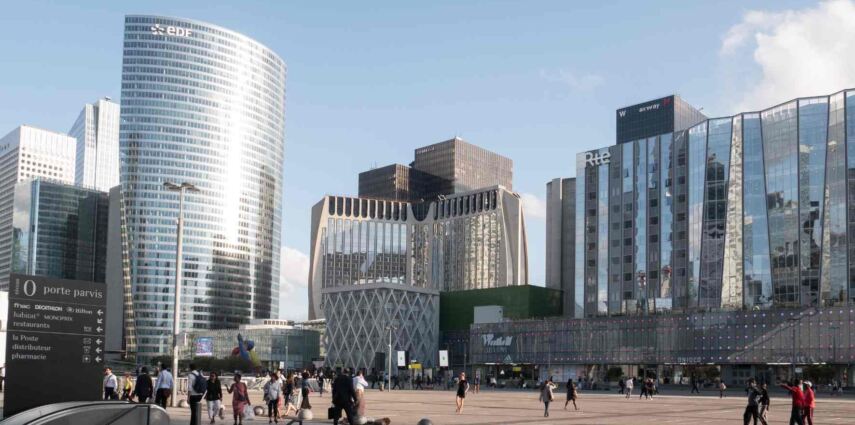
The Adagio Esplanade tourist residence at La Défense (Pierre et Vacances)

waiving eviction compensation

98,265 euros conviction from the court of Nanterre

6 lessors of the Adagio Esplanade tourist residence in La Défense obtained 98,265 euros from the interim relief judge of the Nanterre judicial court by ordering ADAGIO SAS, a member of the Pierre et Vacances group, to pay 98,265 euros (89,265 euros in respect of Covid rent and 9,000 euros in legal costs, article 700 of the CPC).

The Court of Cassation confirmed this solution in its judgments of 30 June 2022.

JUDICIAL COURT OF NANTERRE

INTERIM ORDER ISSUED ON 10 NOVEMBER 2022

No. RG 22/01510 – Portalis No. DB3R-W-B7G-XPL4

N° minute :

c/

S.A.S. ADAGIO

APPLICANTS

all represented by Maître Bruno TRAESCH, lawyer at the PARIS Bar

of PARIS, clerk: E1219

DEFENDANT

S.A.S. ADAGIO

L’Artois Espace Pont de Flandre

11 rue de Cambrai

75947 PARIS CEDEX 19

represented by Maître Philippe RIGLET of SELAFA CMS

FRANCIS LEFEBVRE AVOCATS, lawyers at the bar of

HAUTS-DE-SEINE, Bar: 1701

2

COMPOSITION OF THE COURT

Chairman: Vincent SIZAIRE, Vice-President, holding the hearing

by delegation of the President of the Court,

Clerk: Esrah FERNANDO, Registrar

Ruling publicly at first instance by order

available at the court registry,

in accordance with the notice given at the end of the debates.

The interim relief judge, after hearing the parties present or their counsel, at the

hearing on 10 October 2022, reserved the case for today:

DESCRIPTION OF THE DISPUTE

The parties to this dispute are the owners of co-ownership lots in a building located at 35 cours Michelet in

Puteaux and leased to the Adagio company, which sublets these properties as tourist residences.

tourist residences.

Following the health crisis in March 2020, Adagio suspended payment of part of the rent.

part of the rent.

On 9 June 2022, the plaintiffs brought an action against Adagio before the interim relief judge. In

the latest version of their claims, they ask for :

– that Adagio be ordered to pay the applicant the total sum of

43,960.70; to Mr and Mrs Adagio the total sum of €15,748; to Adagio the total sum of

the total sum of €23,643.10; to Mr the total sum of €19,977.87; to the company the total sum of

company the total sum of € 8,518; to the company the total sum of € 23,643.10

and to Mr and Mrs the total sum of €13,081;

– Adagio be ordered to pay each claimant the sum of 630

under Article 700 of the French Code of Civil Procedure, and to pay all the costs.

costs.

In their written submissions and the observations they presented at the hearing, they argued that Adagio had not

Adagio did not prove that it had paid them the rent due and that its obligation to pay was not

seriously disputable, as the administrative closure to which it was subject did not exempt it from

exempt it from paying the rent.

In its written submissions and the observations it presented at the hearing, Adagio argued for

dismissal of the claims. In the alternative, it seeks the granting of 24 months’ deferred payment.

Lastly, it seeks an order that each of the plaintiffs pay it the sum of 500 euros under

under Article 700 of the French Code of Civil Procedure, and to pay all the costs.

It points out that the plaintiffs have not substantiated their claims and that some of them

signed settlement agreements with it. It also maintains that the impossibility

to which it was subjected amounts to a partial loss of the rented property and a breach of the

and a breach of the obligation to deliver, exempting it from the payment of rent. It

considers that a fine imposed on it would violate its right to property as protected by the

property as protected by Article 1 of the First Additional Protocol to the European Convention on

Convention for the Protection of Human Rights and Fundamental Freedoms.

3

GROUNDS FOR THE DECISION

On the claims for provisional damages

As regards the obligation to pay

It follows from the provisions of Article 835 of the Code of Civil Procedure that, “in cases where

the existence of the obligation is not seriously disputable”, the interim relief judge may

grant an advance to the creditor, or order performance of the obligation even if it is an obligation to do something”.

an obligation to do”. Article 1353 of the Civil Code also states that “a person who

performance of an obligation must prove it. Conversely, a person who claims to be discharged

must justify the payment or the fact which produced the extinction of his obligation”.

In the case in point, Mr and Mrs , M , and the companies , and provide evidence, by producing their

lease agreements or, at the very least, rental receipts issued by Adagio, are creditors of Adagio.

to Adagio for the payment of rents due in consideration of the rental of their properties.

rental of their properties.

Contrary to what the defendant maintains, the total and then partial bans on receiving

to which it was subjected did not deprive it of the enjoyment of the property and therefore

enjoyment of the property and cannot therefore be regarded as constituting a loss of the rented property

or a breach by the lessor of its obligation to deliver.

It also follows from Article 1218 of the Civil Code that a creditor who has not been able to take advantage of the consideration to which he was entitled is not entitled to any compensation.

to which he was entitled cannot obtain suspension of his obligation by invoking force majeure.

invoking force majeure.

Lastly, assuming that the company has a real right in the leased property, the obligation to pay the rent to which the company is subject cannot be suspended on the grounds of force majeure.

to which Adagio is subject has neither the effect nor the object of depriving it of the enjoyment of the

enjoyment of these assets, it cannot claim any infringement of its right to respect for its assets as

property as protected by Article 1 of the First Additional Protocol to the European

to the European Convention for the Protection of Human Rights and Fundamental

freedoms.

It follows from the foregoing that the obligation to pay rent relied upon by M , M and

Ms , M and the companies , and is not subject to any serious dispute. In addition

contrary to what it maintains, Adagio does not in any way justify having signed transactions with these

landlords of any transactions likely to partially extinguish its debt to them.

Having regard to the statements of account produced by the plaintiffs and the payment notices produced by

the defendant, it should therefore be liable for the provisional sums of 23

643.10 to be paid to the company, EUR 8,518.23 to be paid to the company, EUR 7,875.93 to the company

the company , 13,951.78 euros to M , 13,081.01 euros to M and Mme and 22,197.01 euros to

M .

On the other hand, it is clear from the documents in the file that by contract dated 24 September 2020,

granted the defendant an indemnity to compensate for the losses suffered during the periods of administrative closure.

administrative closures. Their request for a provisional order therefore comes up against a serious

and must be rejected.

With regard to payment deadlines

Article 1343-5 of the Civil Code states that “the court may, having regard to the situation of the debtor

the needs of the creditor, defer or stagger payment of the sums due, up to a maximum of two years”.

the payment of sums due”.

4

If it justifies the financial difficulties it encountered as a result of the health crisis in 2020

and 2021, Adagio has not provided any evidence to show that it is in a financial

that it is financially unable to pay, as of the date of the hearing, the sums that may be

to pay.

Its request for payment deadlines must therefore be rejected.

Costs and expenses of the proceedings

Pursuant to Article 700 of the French Code of Civil Procedure, Adagio should be ordered to pay

Adagio the sum of €1,500 in respect of the costs incurred by M , M and

and the companies , and not included in the costs.

As Adagio is the losing party, its claim for the costs of the proceedings can only be approved by the Court.

proceedings can only be dismissed.

Lastly, pursuant to Article 696 of the Code of Civil Procedure, Adagio should be ordered to pay the costs of the proceedings.

costs of the proceedings.

FOR THESE REASONS

The interim relief judge, ruling by contradictory order, publicly and at first instance

at first instance:

ORDER the company Adagio to pay the sum of 23,643.10 euros to the company .

ORDER Adagio to pay the sum of 8,518.23 euros to the company .

ORDERS Adagio to pay the sum of 7875.93 euros to the company ,

orders Adagio to pay the sum of 13,951.78 euros to M

MET to pay Adagio the sum of 13,081.01 euros to be paid to Mr and Mrs

ORDERS Adagio to pay the sum of 22,197.01 euros to Mr .

DISMISSES Adagio’s request for deferred payment.

ORDERS the company Adagio to pay the sum of 1,500 euros to M , M and Ms .

and the companies, pursuant to Article 700 of the Code of Civil Procedure.

DISMISSES all their claims.

DISMISSES Adagio’s claim pursuant to Article 700 of the French Code of

Code of Civil Procedure.

ORDERS Adagio to pay all the costs of the proceedings.

DATED AT NANTERRE, this 10th day of November 2022.

THE REGISTRAR,

Esrah FERNANDO, Registrar

THE PRESIDENT.

Vincent SIZAIRE, Vice-Chairman

Adagio Charras convicted €16,536

Adagio Charras convicted €16536 traesch lawyer

Adagio Charras ordered to pay 16,536 euros (covid commercial rents) to two lessors

The operator of the Adagio Charras residence, PV CP CITY, a company in the Pierre et Vacances group, has been ordered to pay the unpaid covid rents, in accordance with all rulings and in particular the decision of the Cour de Cassation.

The Aparthotel Adagio access La Défense Place Charras tourist residence (formerly a student residence) is located at 1 Rue de Bitche (92400) in Courbevoie.

Adagio Charras: a first conviction of €10,205

The operator of the tourist residence, a member of the PIERRE ET VACANCES group, has been ordered by the interim relief judge of the Nanterre judicial court to pay a landlord the sum of €10,205 (€9,205 in covid rents and €1,000 in respect of article 700 of the CPC).

NO. RG 22/01425

A second award of €6,331

A second lessor of this Adagio Charras residence also obtained an order for the lessee to pay the sum of 6,331 euros (5,131.98 euros in Covid rent and 1,200 euros in article 700 of the CPC).

RG 22/01744

Getting your flat back by paying eviction compensation

Some lessors of the Adagio Charras residence, fed up with repeated unpaid rent, launched proceedings to recover their flat in return for payment of an eviction indemnity/damages. The interim relief judge sometimes specifies that the years 2020 and 2021 should be taken into account in the legal expert’s calculation.

JUDICIAL COURT OF NANTERRE

REFERENCES

SUMMARY ORDER ISSUED ON 12 AUGUST 2022

No. RG 22/01425 – Portalis No. DB3R-W-B7G-XLSO

minute no. :

Mr

Ms

c/

S.A.S.U. PV-CP CITY

APPLICANTS

Mr

Mrs

represented by Maître Bruno TRAESCH, lawyer at the bar of

PARIS, courtroom: E1219

DEFENDANT

S.A.S.U. PV-CP CITY

11 rue de Cambrai

75019 PARIS

represented by Maître Philippe RIGLET of SELAFA CMS FRANCIS LEFEBVRE AVOCATS, lawyers at the HAUTS-DE-SEINE bar, courtroom: 1701

The interim relief judge, after hearing the parties present or their counsel, at the hearing of

13 July 2022, reserved judgment until today.

DESCRIPTION OF THE DISPUTE

Mr and Mrs are co-owners of a property located at 1-5 place de Bitche in Courbevoie (92). This property is leased to PVCP City, which sublets the student residences that make up the complex. Since March 2020, PVCP City has not paid all the rent due to its lessors.

On 12 April 2022, Mr and Mrs summoned PVCP City before the interim relief judge. In their final statement of claim, they requested:

– an order that PVCP City pay them the sum of 17,020.39 euros as a provision for the payment of rents due

– Termination of the lease;

– order PVCP City to pay them the sum of 1,000 euros on the basis of Article 700 of the Code of Civil Procedure, and to pay all the costs.

In their written submissions and the observations they presented at the hearing, they argued that their claim was not seriously disputed, as the company had continued to operate the premises during the health crisis. They also argued that the non-payment of rent constituted serious misconduct justifying termination of the contract.

In its written submissions and the observations it presented at the hearing, PVCP City argued that the claims should be dismissed. In the alternative, it requests that the amount of the sums for which it is liable be reduced to 9,072.18 euros. Lastly, it seeks an order that the plaintiffs pay it the sum of 500 euros each on the basis of Article 700 of the Code of Civil Procedure, as well as all costs.

It maintains that the claims are seriously disputed, in that it was subject to periods of total and then partial prohibition on welcoming the public, amounting to a case of force majeure, a failure to deliver the rented property, a loss of the rented property and a disappearance of the cause of the contract. It also pointed out that it had paid all the rent due outside these periods.

GROUNDS FOR THE DECISION

On the request for an interim order

It follows from the provisions of Article 835 of the Code of Civil Procedure that, “in cases where the existence

of the obligation is not seriously disputable”, the interim relief judge may “grant an advance payment

to the creditor, or order performance of the obligation even if it is an obligation to do”.

In the case in point, it is clear from the documents in the file and in particular from the statement of account drawn up by the defendant company

dated 7 July 2022, that it still owes the sum of 9,205.44 euros in respect of rent

due.

Contrary to what PVCP City maintains, the administrative police measures to which it was

measures to which it was subjected in application of the state of health emergency cannot be regarded as a loss

or failure to deliver the rented property, exempting it from the payment of rent, insofar as they did not deprive it of the enjoyment of the rented property.

deprived it of the use of the premises. For the same reasons, they cannot be regarded as

as depriving it of any cause of its obligation, which consists precisely in the provision of the premises.

3

the rented property. Finally, even if it were the case, the existence of a case of force majeure cannot exonerate the tenant

payment of a sum of money.

It follows from the foregoing that the obligation relied on by the plaintiffs is not subject to any

serious dispute. PVCP City should therefore be required to pay the sum of 9

205.44 by way of provision to be paid to Mr and Mrs .

Termination request

Pursuant to Article 484 of the Code of Civil Procedure, “an interim order is a provisional decision made at the request of a party to a contract”.

made at the request of a party, the other party being present or called upon, in cases where the law confers jurisdiction on a judge who is not a party to the proceedings.

a judge who is not seised of the main proceedings the power to order the necessary measures immediately”.

As the termination of a contract is a final measure, it cannot be ordered by the judge in summary proceedings.

summary proceedings judge. The application made to that end can therefore only be rejected.

Costs and expenses of the proceedings

Pursuant to the provisions of Article 700 of the Code of Civil Procedure, PVCP City should be ordered to pay the costs of the proceedings.

PVCP City the sum of €1,000 in respect of costs incurred by the plaintiffs and not included in the

included in the costs.

As the plaintiffs are not the losing parties, the claim made against them in respect of the costs of the proceedings can only be accepted.

can only be dismissed.

Lastly, pursuant to Article 696 of the Code of Civil Procedure, PVCP City should be ordered to pay the costs of the proceedings.

PVCP City the costs of the proceedings.

FOR THESE REASONS,

The interim relief judge, ruling by contradictory order, publicly and at first instance :

orders PVCP City to pay the sum of EUR 9,205.44 to Mr and Mrs as an advance on the costs of the proceedings.

as an advance on the rent due.

ORDERS PVCP City to pay Mr and Mrs the sum of EUR 1,000 pursuant to Article

pursuant to Article 700 of the French Code of Civil Procedure.

DISMISSES the remainder of Mr and Mrs’s claims.

DISMISSES PVCP City’s claim pursuant to Article 700 of the French Code of

of Civil Procedure.

Orders PVCP City to pay all the costs of the proceedings.

DATED AT NANTERRE, 12 August 2022.

THE REGISTRAR

Divine KAYOULOUD ROSE , Registrar

THE PRESIDENT

Vincent SIZAIRE, Vice-President

4

1

JUDICIAL COURT OF NANTERRE

REFERENCES

SUMMARY ORDER ISSUED ON 18 JANUARY 2023

N° RG 22/01744 – N° Portalis DB3R-W-B7G-XVDW

N° :

c/

PV CP CITY

APPLICANT

S.A.R.L.

represented by Bruno TRAESCH, lawyer at the Paris Bar

PARIS, clerk: E1219

DEFENDERESSE

Société PV-CP CITY

L’Artois Espace Pont de Flandre

11 rue de Cambrai

75019 PARIS

represented by Maître Philippe RIGLET of SELAFA CMS

FRANCIS LEFEBVRE AVOCATS, lawyers at the bar of

HAUTS-DE-SEINE, courtroom: 1701

COMPOSITION OF THE COURT

President: Quentin SIEGRIST, Vice-President, holding the hearing

by delegation of the President of the Court,

Clerk: Pierre CHAUSSONNAUD

Ruling publicly at first instance by order

available at the court registry,

in accordance with the notice given at the end of the debates.

2

We, the President, having heard the parties present or their counsel, at the hearing of 30 November 2022, have reserved the case for today:

STATEMENT OF THE DISPUTE AND THE PROCEDURE

By deeds dated 21 December 2007, the Company acquired from Mr Emmanuel Monlibert and Mrs Ariane Monlibert, on the one hand, and from Mr Julian Cole, on the other hand, two flats, constituting lots no. 101 and no. 158, within a property complex subject to co-ownership status located at 1 rue de Bitche in Courbevoie 92400, known as the “La Défense Charras” residence.

When the flats were acquired, they were leased to Lamy Résidences for the purpose of operating a furnished serviced residence. Under a private deed dated 30 August 2007, Mr Emmanuel Monlibert and Ms Ariane Monlibert leased co-ownership lot no. 101 to the company for a period of 9 years, with effect from 1 October 2007, in return for an annual rent of €4,127.80 excluding VAT, payable in calendar quarters.

Mr Julian Cole leased co-ownership lot 158 to the same company for a period of 9 years from 1 October 2007, in return for an annual rent of 3,956.15 euros excluding VAT, payable every calendar quarter in arrears. A number of rental payments have remained unpaid.

By bailiff’s writ dated 8 July 2022, the company summoned PV-CP City to appear before the interim relief judge of the Nanterre court.

The case was called for hearing on 12 October 2022, but counsel for the defendant company requested that the case be adjourned, arguing that it had been brought late.

GROUNDS FOR THE DECISION

It should first be noted that the parties’ requests that the Court “rule that” do not necessarily constitute claims within the meaning of Article 4 of the Code of Civil Procedure, since they do not confer any specific rights on the party requesting them. Consequently, they will not be mentioned in the operative part.

Requests for an advance

The second paragraph of article 835 of the Code of Civil Procedure provides that in cases where the existence of the obligation is not seriously disputable, they may award an advance to the creditor, or order performance of the obligation even if it is an obligation to do something.

If the amount of the advance awarded in summary proceedings is limited only by the amount of the alleged debt that is not seriously disputable, it must remain provisional in nature, i.e. it must be an advance, the amount of which is intended, on the one hand, to cover costs justified by the claimant and, on the other hand, to be used to calculate the claimant’s loss with regard to the amount of compensation likely to be awarded.

In the present case, the company is seeking an order that PV-CP City, the successor in title to Lamy Résidences, pay it a provision of 6,597 euros in respect of unpaid rent and a provision of 5,000 euros in respect of undue resistance, by way of damages.

damages.

Firstly, with regard to the claim for unpaid rent, the company maintains that the defendant company has an obligation that is not seriously disputable to pay the rent in full under the terms of the commercial lease between the parties. In this regard, it submitted to the court the commercial leases for lots 101 and 158 covering the period from 1 October 2007 to 30 September 2016, as well as a breakdown of the rent due and the rent received from 1 October 2007 to 30 September 2016.

rents collected from the 1st quarter of 2020 to 2022, showing total unpaid rent of 5,131.98 euros.

In its defence, Adagio SAS argues that there is a serious dispute as to whether it should be ordered to pay rent on account of the possibility of invoking the defence of non-performance, given the impossibility of using the rented premises in accordance with their intended purpose and the partial loss of the rented property, which temporarily releases the lessee from its obligation to pay rent.

As a preliminary point, it should be noted that although no renewal of a commercial lease has been produced for the period concerned by the alleged unpaid rents, the defendant company in no way disputes the existence of a binding lease between the parties. In addition, although it objects to the principle of its obligation to pay the unpaid rent, it acknowledges that the amount of the unpaid rent is that shown in the statement of account produced by the company.

On the one hand, with regard to the plea of non-performance, it should be remembered that the administrative measures taken in the context of the health crisis are not attributable to the lessor, so that it cannot be accused of failing in its obligation to deliver. Accordingly, the

plea will be rejected.

On the other hand, with regard to the partial loss of the property, the administrative measures taken in the context of the health crisis did not result in the loss of the property within the meaning of article 1722 of the Civil Code, as the lessee could still physically access the premises, and the limitation or impossibility of using them did not amount to destruction.

It follows from the foregoing that PV-CP City has a non-seriously disputable obligation to pay the outstanding rent, even for the period covered by the administrative measures relating to the health crisis.

The amount of unpaid rent should therefore be determined.

In the present case, the company, which is seeking an order against the defendant company to pay the sum of 6,597 euros in respect of unpaid rent, has submitted a statement to the court showing a lower total amount of unpaid rent, namely the sum of 5,131.98 euros, and has not produced any supporting documents in respect of the surplus it is seeking.

In its defence, the defendant company stated orally at the hearing that it agreed with the amount of unpaid rent shown on the aforementioned statement, and contested the amount claimed of 6,597 euros.

It therefore appears that the provision of 5,131.98 euros requested by the company in respect of unpaid rent is not seriously disputable.

Secondly, with regard to the claim for damages for undue resistance, the company merely includes such a claim in its operative part, without justifying it in its grounds.

As PV-CP City validly submits, in the absence of justification of the principle and extent of the loss that it is claiming, the company will be dismissed from its provisional claim for damages for undue resistance.

Costs

Article 696 of the Code of Civil Procedure provides that the losing party is in principle ordered to pay the costs. PV-CP City should therefore be ordered to pay the costs.

Compensation claimed under Article 700 of the Code of Civil Procedure

Article 700 of the Code of Civil Procedure provides that the court shall order the party required to pay the costs or who loses the case to pay to the other party the sum it determines, in respect of the costs incurred and not included in the costs. The court must take into account the fairness or economic situation of the party ordered to pay costs and may set aside the order for the same reasons.

In this case, the application for an order against the company, which is neither liable for costs nor a losing party, should be rejected.

Taking into account the economic situation of the parties and equity, PV-CP City should be ordered to pay the company the sum of 1,200 euros under Article 700 of the Code of Civil Procedure.

Provisional enforcement

In accordance with articles 514 and 514-1 of the Code of Civil Procedure, it should be noted that

this decision is enforceable on a provisional basis.

FOR THESE REASONS

ORDER PV-CP City to pay the Company the provisional sum of 5,131.98 euros in respect of unpaid rent,

FIND that there are no grounds for summary proceedings in respect of PV-CP City’s request to be ordered to pay the company a provisional sum in respect of undue resistance,

ORDER PV-CP City to pay the costs,

ORDER PV-CP City to pay the company the sum of 1,200 euros in accordance with Article 700 of the French Code of Civil Procedure,

REJECT PV-CP City’s claim under Article 700 of the French Code of Civil Procedure,

REJECT the remainder of the claims,

RECALL that this order is provisionally enforceable.

DATED AT NANTERRE, this 18th day of January 2023.

THE REGISTRAR,

Pierre CHAUSSONNAUD

THE PRESIDENT.

Quentin SIEGRIST, Vice-Chairman

Adagio Val d’Europe Leaseback

Adagio Val d'Europe Leaseback traesch lawyer

On 5 May 2022, 8 lessors of the Adagio Val d’Europe tourist residence succeeded in having the Meaux court order PV RESIDENCES & RESORTS France (PV CP CITY), part of the PIERRE ET VACANCES group, to pay €124,508 (Covid rents: €121,628 and €2,880 under article 700 of the French Criminal Procedure Code).

The Cour de Cassation confirmed this solution in its two rulings and its press release of 30 June 2022.

No “partial loss of the rented property

The operator, a company in the PIERRE ET VACANCES group, claimed that the confinements resulting from an administrative decision could be likened to a partial destruction of the rented property.

The aim was to avoid having to pay arrears of commercial rent for this tourist residence.

The Meaux court rejected this argument in the following terms:

“Temporary unavailability of the leased property, as a result of an administrative decision, is in no way comparable to partial destruction. The very nature of destruction is that it is definitive.

However, in the case in point, what is involved is a temporary administrative closure that cannot be equated with partial destruction of the rented property.

The plea alleging “partial loss of the rented property

Temporary unavailability of the leased property as a result of an administrative decision cannot in any way be equated with partial destruction. In fact, the very nature of destruction is that it is definitive.

However, in the case in point, what is involved is an administrative closure of a temporary nature that cannot be equated with partial destruction of the leased property.

The plea will be rejected.

Judgement of the Meaux judicial court of 5 May 2022, 1st chamber, No. RG 21/01536

Belambra Golfe de Lozari tourist residence (Corsica)

tourist residence traesch lawyer

Judgement by the Bastia judicial court (45,617 euros)

13 landlords in a tourist residence obtained an order from the Bastia judicial court for the operator of the Belambra tourist residence to pay 45,617 euros in covid commercial rents (41,717 euros in principal; 3,900 euros article 700 of the CPC, legal costs).

Judgment of the court of Bastia, 20 September 2022, 1st civil chamber, No. RG 21/00266

Belambra convicted

In the case of 13 Landlords vs. the Operator of Belambra Tourist Residence, the Bastia Judicial Court rendered a significant decision concerning the payment of rents owed during the COVID-19 pandemic. This case centers on the failure of the operator to fulfill its rental obligations, resulting in a judgment in favor of the landlords. The court ordered the operator to pay a total of 45,617 euros, including

41,717 euros in principal and 3,900 euros pursuant to Article 700 of the French Code of Civil Procedure (CPC), which covers the legal costs.

Factual Background

The dispute arose within the context of the COVID-19 pandemic, which significantly impacted businesses, particularly in the tourism sector.

The 13 landlords in question had leased their properties to the operator of the Belambra Tourist Residence under a commercial lease agreement.

Due to the government’s health restrictions and the subsequent impact on tourism, the operator encountered financial difficulties and failed to pay the rent stipulated in the lease agreement.

The landlords, in response to this failure, initiated legal proceedings before the Bastia Judicial Court, seeking to recover unpaid commercial rents that had accrued during the pandemic. The landlords argued that the pandemic and the associated governmental measures did not absolve the operator of its contractual obligation to pay rent. Instead, they contended that the operator was bound by the terms of the lease, regardless of external circumstances affecting its business operations.

The key legal issue in this case was whether the operator of the tourist residence could validly invoke the COVID-19 pandemic and the associated government-imposed restrictions as grounds to be excused from its rental obligations. In essence, the court was asked to determine whether the pandemic constituted force majeure under French law, which would allow the operator to suspend or terminate its obligation to pay rent.

Force majeure is defined under Article 1218 of the French Civil Code as an event that is both unforeseeable and unavoidable, rendering performance of the contractual obligations impossible. The operator argued that the pandemic and the restrictive measures met these criteria and, therefore, excused them from paying rent during the affected period.

However, the landlords countered that while the pandemic undoubtedly created financial difficulties for businesses, it did not make the payment of rent “impossible.” They contended that the financial consequences of the pandemic, however severe, do not relieve a debtor of their obligation to pay unless performance is physically or legally impossible, which was not the case here. The tourism residence was not legally prevented from operating; rather, the demand for its services had diminished.

Court’s Analysis and Decision

The Bastia Judicial Court agreed with the landlords’ argument, ruling that the operator was not excused from paying rent under the doctrine of force majeure. The court noted that the pandemic, while unforeseeable and disruptive, did not render it impossible for the operator to pay rent. The court emphasized that force majeure must be interpreted strictly and cannot be invoked simply because an event makes contractual performance more difficult or economically burdensome.

The court further reasoned that commercial leases are fundamentally based on the principle of risk allocation. In leasing property, the tenant assumes certain risks, including those related to changes in market conditions or external events affecting their business. The court held that it was not the landlords’ responsibility to bear the financial burden of the operator’s inability to generate revenue due to the pandemic.

Consequently, the court ordered the operator to pay the outstanding rents totaling 41,717 euros, along with an additional 3,900 euros under Article 700 CPC, which allows the court to award costs associated with the legal proceedings to the prevailing party.

Conclusion

This decision underscores the principle that, even in extraordinary circumstances such as the COVID-19 pandemic, commercial tenants cannot automatically invoke force majeure to avoid their rental obligations.

The ruling affirms the contractual responsibilities of tenants, particularly in the context of commercial leases, and emphasizes the importance of clear risk allocation in such agreements. The Bastia Judicial Court’s judgment in favor of the landlords reflects a strict interpretation of force majeure under French law and reinforces the legal certainty surrounding the payment of commercial rents.

Please feel free to ask us any question here.

Adagio Charras: eviction costs

nexity studea traesch lawyer

Tourist residence: Eviction compensation for Adagio Charras

Rejection of Pierre et Vacances’ claim to ignore 2020 and 2021

The interim relief judge of the Nanterre court confirms that the years 2020 and 2021 must be taken into account when calculating the eviction compensation claimed by Pierre et Vacances for the tourist residence, a former student residence at the end of the lease:

“In its written submissions at the hearing, PV CP CITY, without contesting the expert’s report in principle, requested that the years 2020 and 2021 be excluded from the scope of the expert’s assignment, on the grounds that they were not representative of the normal operating conditions of the business in light of the administrative measures taken as part of the Covid-19 health crisis.”

Compensation for eviction must be calculated at the time when the loss is incurred, i.e. either on the date of eviction or on the date when the tenant ceases to occupy the premises on a regular basis. The value of the business assets must be assessed on the date on which the courts rule when eviction has not yet occurred (Com. 30 June 1959, Bull. civ. III, no 292; Civ. 3e, 24 Nov. 2004, no 03-14.620), it being noted that the value of the business must be determined on the basis of the lessees’ last three years’ turnover before the eviction (Civ. 3e, 20 March 2007, no 06-11.040).

With regard to the assignment, although the defendant argues that the years 2020 and 2021 are not representative of its business in terms of the measures taken to manage the health crisis, it does not specify the measures to which it refers or their impact, and it does not submit any documents to the court to support the alleged effects, even though the scope of the expert’s assignment is disputed and consequently the elements put forward in its defence cannot be taken for granted. Consequently, there is no reason to exclude the last two years of activity from the mission entrusted to the expert.

(Judgment of 25 May 2022 No. RG 22/00259)

It will be recalled that the Cour de Cassation stated in a clear statement that the unpaid rents in 2020 and 2021 by Pierre et Vacances and the other operators were due:

“The general and temporary measure prohibiting the reception of the public does not result in the loss of the rented property and does not constitute a breach by the lessor of his obligation to deliver. A tenant is not entitled to rely on this as force majeure in order to escape payment of his rent”.

Cour de cassation, no. 21-19.889 – no. 21-20.127 – no. 21-20.190

Adagio Tour Eiffel Unpaid rents covid

Adagio Tour Eiffel Unpaid rents covid traesch lawyer

Adagio Paris Tour Eiffel tourist residence (rue du théâtre)

The Paris judicial court has ordered Pierre et Vacances, which operates the Adagio Paris Tour Eiffel residence, to pay covid for unpaid rent.

The Adagio residences are operated by a company in the Pierre et Vacances group, PV CP CITY. The Adagio brand is owned by Pierre et Vacances and the ACCOR group.

A procedure initiated by 31 lessors

On 22 March 2023, Pierre et Vacances (PV CP CITY) was ordered by the Paris Magistrates’ Court to pay €848,649 to 31 lessors (€845,549 in unpaid rent and €3,100 in article 700 CPC) of the Adagio Paris Tour Eiffel residence.

Application of Court of Cassation case law from 2022

The 18th civil division of the court dismissed the operator’s arguments in accordance with the case law of the Cour de cassation of June 2022. The Court of Cassation has issued a statement to give its decisions greater weight in the courts responsible for applying this solution.

Rejection of the plea of non-performance based on an alleged breach of the lessor’s obligation to deliver and force majeure

The plea of non-performance and force majeure were rightly rejected, in view of the positive law established by the Cour de cassation.

Responses from the Board of Directors to shareholders’ written questions

The operator favours its shareholders over its lessors, despite the public aid it receives:

“Rent expense is virtually stable compared with the previous financial year (up €3 million) lease renewals (€20 million) being offset by lower rental savings in discussions with the Group’s lessors than those recorded in the previous financial year (€47 million in FY 2021 vs. almost €70 million in FY 2020).

Rental savings in FY 2021 are limited to :

– the net savings achieved by applying the endorsements signed by 59.3% of individual lessors as at 30 September 2021 (deductible equivalent to 7.5 months’ rent, including 5 months in respect of FY 2021, i.e. a saving for the Group of around 29 million euros over the year, largely offset by a charge of 28 million euros corresponding to the face value of the vouchers awarded to signatories of the endorsement).

The result for the year also includes a saving of 7 million euros relating to suspended rental payments to non-signatory lessors for periods of administrative closure during which the Group considers, on the legal basis of the exception of non-performance or on the basis of the provisions of Article 1722 of the French Civil Code, that the rental debt is extinguished.

– the net savings achieved by applying the agreements signed with institutional lessors, representing an amount of around €39 million for FY 2021 (rent-free periods / variable rents with guaranteed minimums, net of the provisioning of rents under financial recovery clauses).

The 2019/2020 financial year saw rental savings of almost €70 million (€30 million in respect of rents from individual lessors suspended during the administrative closure period and €40 million in respect of agreements negotiated with institutional lessors).”

(Brochure_de_convocation_AGM 31 March 2022, page 8)

“The Group has based its assessment on the legal basis of the exception for non-performance and on the provisions of Article 1722 of the French Civil Code. As a result, no liability has been recognised in this respect at 30 September 2021.

This position has been validated by the Group’s statutory auditors.

– What are the texts, decrees or administrative regulations referred to under the term “administrative closure” used on page 15 of the Notice of Meeting brochure, in respect of the period considered “mid-March to the end of May and November to mid-December 2020”?

The texts applicable to the period from “mid-March to the end of May and November to mid-December 2020” are as follows:

Ministerial orders of 14 and 15 March 2020 and decree no. 2020-293 of 23 March 2020

– Decree no. 2020-548 of 11 May 2020, amended by Decree no. 2020-604 of 20 May 2020

– Decree no. 2020-1310 of 29 October 2020

Debts due in respect of all unpaid rents to non-signatory individual lessors for the period from 1 January to 30 June 2021 are recorded as liabilities (under trade payables in the Group’s parent company and consolidated financial statements) in an amount of approximately €32 million at 30 September 2021.

To date, these debts represent only €16 million, the share of non-signatory lessors having been halved compared with 30 September 2021. The suspended rents for the other so-called interim periods (periods between administrative closures) have also been paid in full.

The Group, with the support of its legal advisors, considers that the rental debt relating to the administrative closure periods has been extinguished. The Group relies on the following legal bases:

– The exception of non-performance due to the breach of the obligation of peaceful enjoyment (articles 1219 and 1719 of the French Civil Code); and

– the grounds of partial destruction (loss) of the premises (article 1722 of the Civil Code).

Accordingly, no provision has been recorded in the Group’s consolidated financial statements in this respect.

(Responses from the Board of Directors to written questions from shareholders, Combined General Meeting of 31 March 2022)

State guarented loans and public subsidies to Pierre et Vacances

Lastly, the court noted the significant public subsidies received by the tourist residence group.

Statutory auditors’ report of 30 September 2021

The auditors’ report of 30 September 2021 states that 551 million euros of debt had been converted into capital and that “25 million euros of the PGE had been maintained”.

The PIERRE ET VACANCES group will therefore not be obliged to repay 215 million of the 240 million of the first PGE.

The new and second EMP for 34.5 million euros

The PIERRE ET VACANCES group benefits from a new and second PGE amounting to 34.5 million euros.

(Statutory auditors’ report of 30 September 2021, pages 17, 19 and 43)

Closure aid

The operator obtained so-called “closure” aid from the State amounting to €24 million “to compensate for the fixed costs not covered by companies whose business is particularly affected by the Covid 19 epidemic”.

(Statutory auditors’ report of 30 September 2021, page 44)

Refusal to sign agreements unfavourable to lessors under the pressure of pseudo-conciliation before the Commercial Court

The operator intends to make the lessors pay for its operating risks, despite the fact that it is not sharing the healthy profits from the record years for tourism in Paris in 2018 and 2019 with its “investors”, the individual lessors.

The operator tried to get the lessors to sign an amendment under which they acknowledged that they had breached their obligation to deliver in exchange for non-existent concessions such as the payment of rent for subsequent quarters.

Court orders Pierre et Vacances to pay unpaid rent covid

The landlords can congratulate themselves on not having given in to pressure and untruths.

Pierre et Vacances waiver cancelled by the court

adagio marseille traesch lawyer

Rent deferral, not a waiver of the covid rents

Lack of impartiality of the conciliator before the commercial court

The tenant, operator of the leaseback property, proposed a rent waiver amendments to the lessors. The Pierre et Vacances Group put pressure on landlords to agree to rent waivers for the Covid period. In particular, it financed 100% of a conciliation before the commercial court, while refusing the conciliations proposed by the judicial court, which would have provided guarantees of impartiality. The role of the conciliator before the commercial court is to have claims waived (to save the failing company). Legal untruths were written to the lessors in an attempt to convince them to give in. Our firm refused to take part in this conciliation, as it did not offer the minimum guarantees of impartiality.

The court of Paris interpreted PV CP CITY’s waiver no. 2 as follows:

“It is clear from these documents that the lessor grants the lessee a deductible of 5 months  contractual rent excluding taxes and charges, including the entire period from March 15, 2020 to June 13, 2020.

Reciprocally, the lessee undertakes to pay the lessor the positive difference between the contractual rent and the above-mentioned waiver, net of rent already paid, in respect of the restrictive measures periods on December 31, 2021.

Consequently, it follows from these waivers that the lessee’s rent payments will be deferred, and not that the lessor will remit rent for the period from March 15, 2020 to June 13, 2020.

The claim to dismiss the action for payment brought by Mr. and Mrs. I. and by the company I. is inoperative.”

(Judgment of the Paris District Court, 18th Civil Division, March 22, 2023)

Failure to sign the waiver

The court of Paris rejected also the claim of Pierre et vacances regading the waiver of other lessors, but based on a different legal ground.

“Finally, it should be noted that Mr. A., Mrs. C. and Mr. E. did not sign these endorsements. The claim is also inoperative.”

(Judgment of the Paris District Court, 18th Civil Division, March 22, 2023)

The tenant failed to prove the signatures of these waivers.

The question of the waiver concerned only some of the lessors of this group of 40 owners, the rest having refused to sign a transaction devoid of reciprocal concessions.

As a reminder, the lessee was ordered to pay 31 de la résidence Adagio Paris Tour Eiffel 845,549 euros in unpaid rent and 3100 euros in legal fees (article 700 CPC).

ASK YOUR QUESTION (FREE) - RESPONSE WITHIN A BUSINESS DAY

We will respond to all e-mail contacts within a business day. We Make French Law Understandable. The answer to your question will be written only by a partner of our law firm.