Right of pre-emption in favour of the lessor

Right of pre-emption in favour of the lessor traesch lawyer

Right of pre-emption and preferential agreement in favour of the lessor


Invalidity of clauses preventing the lessee from assigning his commercial lease

“Are also null and void, whatever their form, any agreements intended to prevent the tenant from transferring his lease or the rights he holds under this chapter to the purchaser of his business or company. (L145-16 Commercial Code)

The lessor’s right of first refusal on the sale of the business

A clause stipulating the lessor’s right of first refusal in the event of the sale of a business is valid.

The clause is without prejudice to the lessee’s rights under the commercial lease statute. (Cass. civ. 3, 12-07-2000, n° 98-22.000, published, n° 198)

However, this clause is only lawful on condition that the lessee can sell his business and assign his lease to the buyer of his choice, at a price of his choice. (Cass. com., 17-02-1960, n° 57-11.835, published, n° 68)

A lessor with a right of pre-emption may invoke the irregularity of the notification of the transfer of the business, even if he has requested additional information. In this case, the judges consider that the lessor did not unequivocally express his intention to waive his right of pre-emption. (Cass. com., 13-11-2003, n° 01-02.620, unpublished)

Pre-emptive agreement enables lessor to choose purchaser of business goodwill

The parties may include a preferential agreement in the lease contract, enabling the lessor to choose the purchaser of the business. (Cass. civ. 3, 12-07-1995, n° 93-11.666, published, n° 184)

The purchaser of the business is not obliged to verify the intentions of the beneficiary of a preference agreement stipulated in the lease. Thus, the lessor must prove that the transferee had been informed of his intention to avail himself of the pact in order to convict him.

(Cass. civ. 3, 29-06-2010, n° 09-68.110, Mme Jeannette Barande, épouse Gard, F-D)

If you have any questions, please contact us using the contact form at the bottom of the page.

Investing in a leaseback residences: 7 tips

traesch lawyer

If you want to invest in real estate and benefit from the many advantages of tax exemption, there are a number of pitfalls to avoid. What are these pitfalls and how can you avoid them? Our real estate lawyer answers these questions in this article…

There are three key points to bear in mind when considering a real estate transaction of this type:

  • have a precise idea of the yield and final rent of the property in question
  • carefully analyze the exact clauses of the contract you are signing
  • anticipate the resale of the property

Let’s take a look at each of these points.

Annual yield and rent for the end customer

Tip no. 1: the marketer of the serviced residence you wish to acquire will tell you what return you can expect. Some people give unrealistic yields in an attempt to rush the sale.

You should know that the average return on such an operation is between 3.5% and 4.5%, depending on the city. If you are given a higher figure, don’t believe the person you are talking to.

Second tip: some properties are overvalued, which means they will never find tenants.

So it’s important to do your homework: check that the rents forecast by the operator of the “tax-free” residence correspond to the local rental market.

This is essential to ensure that the property in question won’t remain vacant for months or even years, which would undermine the profitability of your real estate investment.

Understand the contracts you sign

Tip 3: Have your commercial leaseanalyzed by a lawyer.

This principle applies to all contracts, but is particularly relevant here, given the complexity of real estate law.

You therefore need the assistance of a specialist in the field, able to detect any pitfalls that may have crept into one of the contract’s clauses.

Tip no. 4: never buy a property without visiting it, tax exemption or not!

The classic mistake is to believe that this is a simple financial operation or a tax exemption scheme with guaranteed results.

In reality, it’s a real estate purchase, subject to the same rules as any other purchase, such as that of a principal residence: you must never lose sight of this.

Tip n°5: never forget the golden rule of location.

No, the operator who “guarantees” an annual rent does not bear the risks alone. If he doesn’t make enough revenue, he won’t hesitate to stop paying the rent and renegotiate it downwards!

Preparing for the exit at the time of investment: try to anticipate the resale of the property

Tip n°6: When to resell? Timing is everything when it comes to selling a property.

The ideal time is probably before major work is carried out on the serviced residence, for example (after a maximum of 9-10 years from the date of purchase).

Tip 7: It’s always a good idea to study the resale market for this type of property.

Admittedly, this information can be hard to find, but patient research can sometimes yield valuable insights.

Conclusion

As you can see, by taking a few precautions, you can reduce the risk of falling into the traps that surround tax exemption.

The best thing to do is to seek the advice and assistance of a real estate law professional. Our lawyer is at your service for this type of mission. To contact him, please fill in this form.

We will call you back promptly to discuss your situation and offer you legal advice.

Student residence: lease renewal

Student residence lease renewal traesch lawyer

Student residence and commercial lease renewal

Tax-free rental investment in student residences is based on a commercial lease.

A commercial lease in a student residence is supposed to offer a high return and an attractive tax exemption. But what happens when the first 9-year lease expires? The operator, the commercial tenant, often takes advantage of the situation to offer a new lease with a lower rent. The operator’s main argument is to maintain the status quo as regards management of the student residence and condominium charges. Lessors are relieved of the management burden, which sometimes encourages them to accept drastic rent cuts. However, under the Pinel law, co-ownership charges must be paid by lessors in any case.

Principle of renewal

IN BRIEF

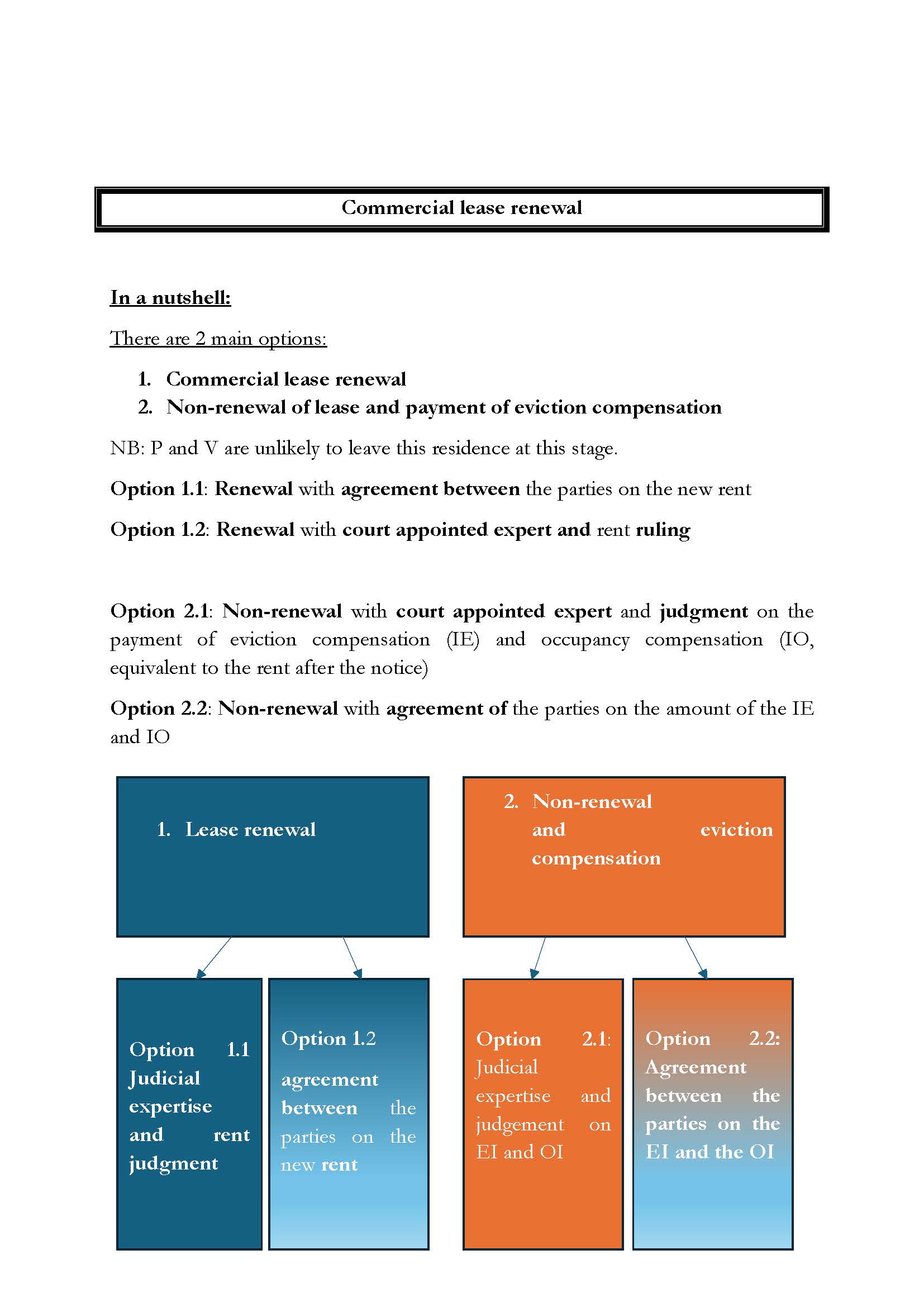
  1. Proposal for a new lower rent by the operator (tenant)
  2. Legal appraisal proposing a calculation for eviction compensation
  3. Possible amicable agreement based on the legal expert’s rent proposal
  4. Rent judge sets new commercial rent

The different stages of commercial lease renewal

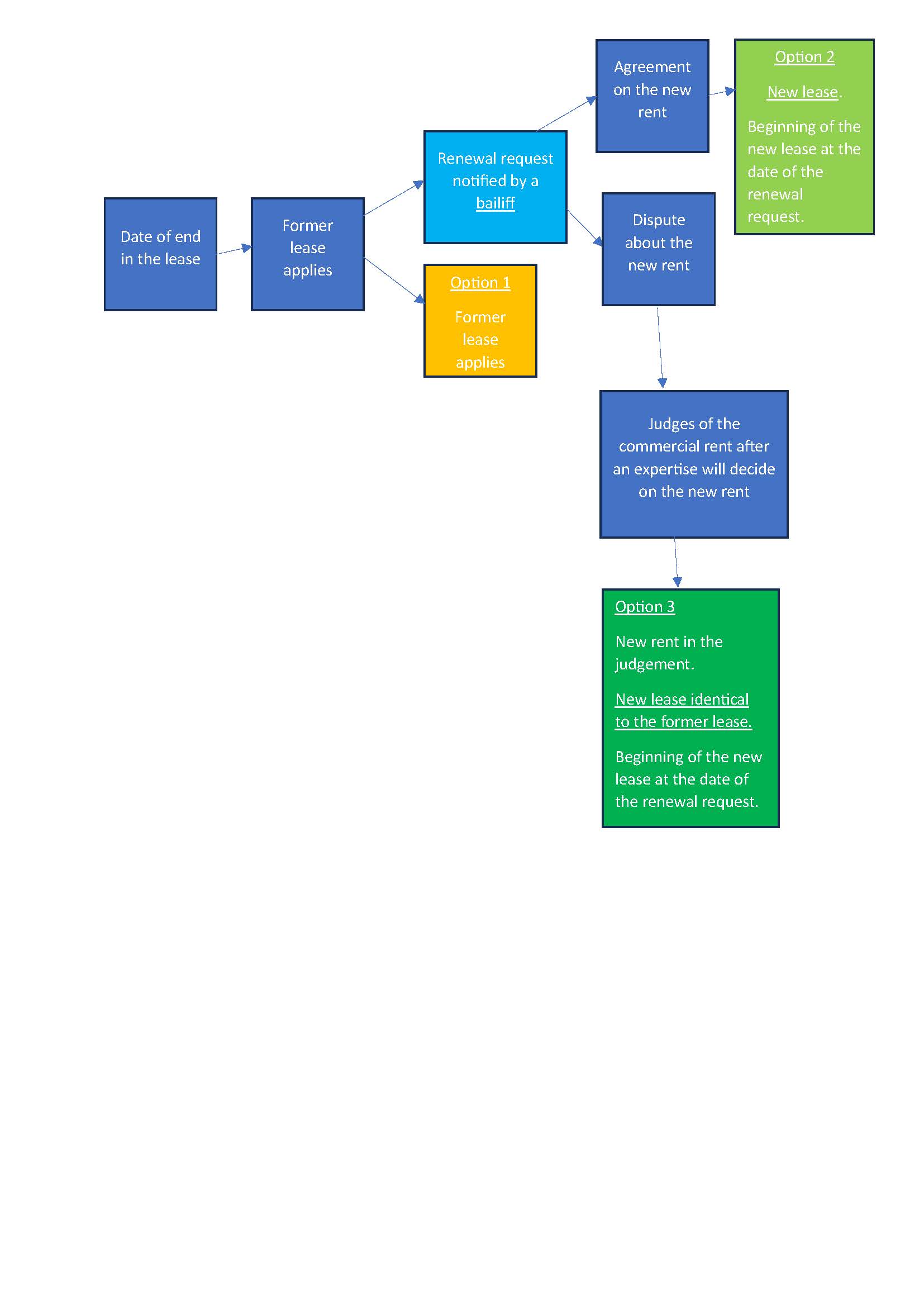
The renewal of a commercial lease is subject to certain formalities. It is not tacit, and if there is no formal renewal, the lease contract simply continues, on the basis of the initial lease. It is therefore the old lease that continues and not a new lease that takes effect. The Rent Judge sets the rent for the new lease, if the operator wishes to renew the lease contract, often with numerous rent cuts in support, and the lessor-landlord does not wish to modify the terms of the contract. A brief is sent to the lessor, usually including an amicable expert’s report to support the claim. This report is often biased and in favor of the lessee’s interests alone. You must not give too much credit to these reports. Either the operator or the lessor can refer the matter to the Rent Tribunal and request the appointment of a legal expert. The judicial expert visits the residence and calculates the rental value (the new rent). They each use different methods and different calculation procedures, based in particular on gross margins and sales (costs and revenues). The hotel method, even when adapted to student residences, is unfavorable to the lessor-owner. It’s much fairer to consider the student residence operator as a real estate administrator. The rent judge decides on the amount of the new rent on the basis of the judicial expert’s report. However, if the owner does not agree with the downward revision of the rent, he can change his mind and opt to pay the eviction indemnity.

Consequences of non-renewal differ according to the author

If the lessee simply wishes to terminate the contract, he/she must formally signify this and the obligations on both sides cease.

Payment of eviction compensation by the lessor

If the lessor decides not to renew the commercial lease, he must pay the operator an eviction indemnity. This indemnity is intended to compensate the operator for his alleged loss, even though the residence is not 100% full and an apartment will make no difference to his sales. A ruling by the French Supreme Court (Cour de Cassation) has decided that the amount of the indemnity will be calculated on the part of the goodwill represented by the apartments whose leases have not been renewed.

How can the lessor escape eviction compensation?

Eviction indemnity waiver clause

If the operator of a student residence expressly waives his right to eviction AFTER the initial commercial lease has been signed, the landlord is no longer required to pay eviction compensation.

Gross negligence justifying the absence of eviction compensation

If the tenant-operator fails to meet his contractual obligations, the non-renewal of the commercial lease will not be accompanied by the payment of eviction compensation. However, these breaches must be of a certain seriousness. The law speaks of a serious and legitimate reason. The courts require particularly serious faults, and regularly refuse to apply this requirement to repeated breaches of the commercial lease. Commercial leases for student residences have a particular feature when it comes to apportioning charges. The vast majority of these are the responsibility of the operator. As a result, failure to maintain the leased property is more likely to be cited as a serious breach of contract. The landlord must clearly state these serious reasons in the decision not to renew, which will be notified to the operator. A typical case is that of a transfer made without the lessor’s agreement, even though a clause in the contract provided for this. Systematic late payment of rent has sometimes been considered a serious reason by case law.

In another case, if the property is declared unfit for habitation by a prefectoral decision, no eviction indemnity can be demanded. If the building is rebuilt, the landlord is under no obligation to relocate the tenant. Last but not least, physical or verbal violence also constitutes grounds for non-payment of eviction compensation in the event of non-renewal by the landlord. Renting to non-students can be a serious and legitimate reason for not paying eviction compensation to the landlord.

If you have any questions, please contact us using the contact form at the bottom of the page.

French Leaseback : 4 pitfalls to avoid

traesch lawyer

The bottom line

There’s no such thing as a “risk-free” real estate purchase, especially when it comes to tax exemption. The classic pitfalls are buying at too high a price (in order to save more tax) in medium-sized towns with no potential for university growth, and in a student residence that is poorly placed and too expensive. Unfortunately, these pitfalls are frequently encountered in practice.

Wealth advisors extol the benefits of investing in a student residence in Bordeaux, Lyon or another city.

Investing in a student residence can be a good investment, but there’s nothing obvious about it. What’s more, buying off-plan is not without its pitfalls. A rental investment in a student room is a real estate purchase like any other. In other words, the location of the property is crucial, depending on the neighborhood and the city.

The same applies to an investment in a tourist residence, in terms of the city’s tourist potential.

Investing in a student residence: the limits of tax benefits

1. The mirage of “risk-free” and “guaranteed” student residence investment

Believing you’re buying a “financial product”, a “guaranteed, risk-free investment”. The search for “tax relief” should not obscure the fact that this is a REAL ESTATE PURCHASE made by YOU ALONE. This is the only version of reality that will appear on the contracts and legal documents you sign. The fact that you didn’t carry out the economic and legal arrangements, or sign the documents in person at the notary’s office, or have never even seen the apartment purchased, doesn’t change this reality.

2. BUYING MUCH TOO EXPENSIVE IN MIDDLE-SIZED CITIES and believing that the law protects you from buying property at a price that is far too high in relation to the market price. The tax advantage must not lead to a poor property purchase in a student residence that cannot be sold later (and is sometimes difficult to rent).

3. Invest in student residences in cities with (really) strong university potential (Lyon, Bordeaux, Lille, Marseille, Nice or Montpellier) to ensure a sufficient occupancy rate (for the tenant-operator and the lessor, who will only be paid if the company makes a profit). Beware of investments in medium-sized towns already saturated with housing, where the developer approaching you will offer hundreds of units in addition to your own.

4. Don’t buy in a poorly located student residence. Despite all the “guarantees” of the salesperson canvassing you, don’t forget the golden rule of buying real estate LOCATION, LOCATION and LOCATION (“location, location, location” in English).

TIP

  • Find studies on the rental market and schools and universities in the proposed city before investing in a student residence,
  • Check the exact location of the student residence in the city, including distances to the main schools (e.g. with googlemap, google earth, mappy etc.).
  • Check the location of the tourist residence (or service residence) and the means of access (public transport, road, airport). How many minutes’ walk from the center, for example.
  • Check the figures for the number of students or tourists in the city and the different seasons.
  • Look for evidence of demand for student or tourist accommodation.

FREQUENT HAZARDS AND DIFFICULTIES

  • Frequent and recurring risks of rent arrears (which can last for several years).
  • Attempts by the company renting the student residence to renegotiate rents downwards (as with other service residences such as tourist resorts).
  • Loss of value on sale of the property, even after 10 years (!)
  • Bankruptcy of the company leasing the student residence
  • Major works to be financed after ten years, when rental income from the student residence is low.
  • The reform of the Loi PINEL allows commercial tenants to limit the charges they have to pay: the end of the “triple net” lease.

MEDIUM- AND LONG-TERM INVESTMENT PLANNING

Commercial leases are often ignored by buyers. Salespeople selling tax-free real estate investments rarely mention them. The operator of a student (or tourist) residence is entitled to renew his commercial lease after 9 years. The landlord who intends to reclaim his apartment must pay the tenant an eviction indemnity. (This represents several tens of thousands of euros).

What’s more, after 9 years, the tenant often asks for a legal appraisal (or negotiates a rent reduction by scaring the landlords), by returning to the “rental value” (determined by an expert according to calculation methods based on the operator’s results).

Many operators offer rents for the first nine years, knowing that they will request and obtain a rent reduction 9 years later.

Exceptional expenses and work will gradually be billed to the owner-landlords, who are used to taking care of nothing and paying a modest flat-rate for expenses.

If you have any questions, please contact us using the contact form at the bottom of the page.

Résidence de Tourisme : Successful lease renewal

nexity studea montpellier traesch lawyer

Tourist residence: The pitfalls of commercial lease renewal

When a commercial lease comes up for renewal, negotiations take place between the lessor (owner) and the operator (lessee). These often resemble blackmail rather than genuine negotiations. Some large operators simply propose a very substantial, unilateral rent reduction. The operator of a tourist or student residence will sometimes enclose a one-sided and totally biased expert report. Finally, the contact details of a law firm are sometimes included at the end of the letter, to discourage lessors from challenging the unilateral rent reduction in court. However, the judge is always more favorable than the operator who decides unilaterally.

The operator’s erroneous tax argument

Commercial leases in tourist residences offer buyers tax advantages, such as exemption from VAT, provided the property is leased for a period of 20 years, under penalty of having to reimburse the pro rata VAT for the years the apartment remains empty in this context. For example: if the lessor has rented out the property for 10 years, he must refund half the VAT; 18 years, only 2/10ths of the VAT. Operators sometimes use a false tax argument, threatening lessors with the obligation to refund 100% of VAT if the commercial lease is not renewed (in return for a drastic reduction in rent). This assertion is false. The lessor only reimburses the prorata of the years remaining on his commitment (generally 20 years), so after an initial 9-year lease and one year of tacit effect after the end of the lease, for example, 11/20 of VAT remains to be reimbursed.

Nevertheless, the total rent reduction must be calculated over the next nine years. What’s more, it leads to a sharp drop in the selling price of the apartment, which is sold at the annual yield (% of rent to selling price / year). This loss is often far greater than a hypothetical VAT refund. Not to mention the fact that the lessor operating the apartment directly will earn much higher revenues. Some lessors use platforms such as Airbnb or homelidays. Others hire local real estate agents to rent out their apartments to tourists throughout the year, depending on the season or half-season.

Tourist residences: the situation of the owner-lessor

Some heavyweights in the tourist residence sector play on this to obtain “amicably” a reduction that sometimes reaches 75%. Non-renewal would result in VAT reimbursement in addition to the absence of rental income. Operators wishing to renegotiate rents must first give notice and have 6 months in which to submit an amendment to the lease contract to the lessor. In most cases, the operator is in a position of strength, and the lessor…alone.

Renewal is not tacit. If the contract continues without renewal, the lease contract continues with the risk of the tenant’s departure. If the rent is deemed too high, the landlord can always withdraw and decide to pay the eviction indemnity within one month of the court decision.

If the owner decides not to renew the commercial lease, he is obliged to compensate the operator for the loss suffered. This is the justification for the commercial lease statute. These legal provisions protect the tenant, who is normally the weaker party in the lease contract. This is obviously not the case in tourist or student residences, where the lessor is faced with groups of property management companies. Even so, the rules are virtually the same, and the courts are only just beginning to re-establish some sort of balance on an ad hoc basis. Non-renewal with eviction compensation can nevertheless be an opportunity to increase rents if they are undervalued, or to sell at a capital gain without a commercial lease. However, the lessor must have the cash flow to advance the eviction indemnity costs before cashing in the proceeds of the sale or rentals over several years.

Alternatives for the lessor

The first option is to negotiate, with the help of an independent lawyer specializing in tourism residences. The residence manager has a legal obligation, confirmed by a ruling of the Cour de Cassation (French Supreme Court), to provide the lessor with the operating account in addition to the balance sheet, the occupancy rates of the residences and the evolution of expenditure and revenue items. This will serve as the basis for negotiations. Managers requesting a rent reduction must provide proof that this is essential for sound management.

As part of the negotiations, operators sometimes propose to “associate” lessors with the result by providing for a fixed rent accompanied by a share that fluctuates according to results. This share must necessarily be in the minority, otherwise the tax authorities will requalify the contract. Landlords can also demand a waiver of the eviction indemnity in exchange for a reduction in rent, BUT this can only be done after the new lease has been signed.

The second hypothesis is that the operator does not wish to renew the commercial lease of a residence he does not consider profitable enough. They often offer palliatives that pay a percentage of sales, with no guaranteed rent to lessors (e.g. maeva.com). In this case, of course, there is no eviction indemnity to pay. The lessor must then find a new operator, or risk having to reimburse the tax authorities for the remaining years of VAT up to the twentieth year, which is the period stipulated by law for benefiting from the tax advantages of renting out tourist residences. In recent years, a number of end-of-lease specialists have appeared on the scene, but the residence must be in an attractive location, and dishonest buyers – of which there are many – must be avoided.

The third option is to create your own operating structure to avoid VAT refunds if the property is not of interest to any operator. This option is subject to the precise conditions laid down by the law that created the tax-free property sale and rental scheme.

  1. Do not sign the first commercial lease renewal proposal sent by the operator of the tourist residence.
  2. Ask a tourist residence lawyer a free question.
  3. Take time to reflect on the right strategy, so as not to lose your assets by following the wrong legal and tax advice.
  4. Join a tourist home lessor group

If you have any questions, please contact us using the contact form at the bottom of the page.

Loopholes and pitfalls of a commercial leaseback

Loopholes and pitfalls of a commercial leaseback

Advice on commercial leases

Analysis of draft commercial lease BEFORE signature

The drafting of a commercial lease gives the parties considerable freedom to organize their contractual relationship. It is ESSENTIAL to have any lease or legal document analyzed by a professional legal expert, such as a lawyer, BEFORE signing it, to ensure a long-lasting and fruitful business relationship.

Drafting clauses for commercial leases

Our lawyers draft commercial leases and analyze the legal effects of our customers’ commercial lease clauses.

Representation in commercial lease matters

Unpaid rent on commercial leases

Our lawyers can also provide fast and effective responses to unpaid rents, whether in eviction proceedings or in drafting letters of formal notice.

Our expertise in commercial leases is reinforced by our representation of our clients in legal proceedings, pre-litigation negotiations and advice on the drafting and management of commercial leases. Our fees are all-inclusive and set out in full in an engagement letter/fee agreement signed with our clients. The predictability and control of fixed costs is an advantage appreciated by our customers. Our clients are owner-operator companies, commercial leaseholders and owners of businesses to be managed and sold.

If you have any questions, please contact us using the contact form at the bottom of the page.

Termination of the lease sold without the lessor’s consent

Termination of the lease sold without the lessor's consent traesch lawyer

A lessee who assigns his commercial lease without the lessor’s authorization, even though this is required by the commercial lease, is liable to have his commercial lease terminated by the court. Such a breach is sufficiently serious to justify termination, even without any particular prejudice to the lessor. This is the case, for example, of a clause stipulating that “the transfer may only take place in the presence of the lessor, or with him duly summoned”.

The need for judicial authorization in the event of disagreement on the part of the lessor

If the lessor disagrees, the lessee must obtain judicial authorization.

Silence and lack of opposition on the part of an uninformed landlord

In the event of silence on the part of the owners, and in the absence of any express opposition, judges consider that failure to comply with the clause in the lease requiring the lessor’s written consent to any transfer is not serious enough to justify termination. (Cass. civ. 3, 20-10-1971, n° 70-12.995, published, n° 504)

Knowledge of the assignment and collection of rent is not always sufficient, depending on the lease.

If the commercial lease specifies that no tolerance on the part of the lessor could create rights in favor of the lessee, the lessor, having knowledge of the assignment and of the payment of rent by the new lessee, does not accept the assignment by regularizing a posteriori his absence from the deed of assignment of the commercial lease.

If you have any questions, please contact us using the contact form at the bottom of the page.

Leaseback: breach of contract

Leaseback breach of contract traesch lawyer

In the judgment handed down by the Versailles Court of Appeal on 18 December 2018, the main issue is compliance with the tenant’s financial and contractual obligations, in particular the regular payment of rent.

Unpaid rents

The lessor (landlord) has initiated proceedings due to breaches by the tenant, such as late or unpaid rent. The landlord relied on the clauses of the lease, including the resolutory clause, to request termination of the contract in the event of serious breaches. The Court also considered whether these breaches were significant enough to justify termination.

In its arguments, the landlord emphasised that compliance with the terms of the lease was essential to guarantee the economic equilibrium of the property development, in particular the timely payment of rent. Failure to comply with these obligations jeopardises the proper performance of the contract and causes financial loss.

Indexation clause

The lessor also argues that the clauses relating to indexation or rent review must be applied strictly in accordance with the contractual terms and the legal provisions in force.

In addition, the formal notice or order to pay procedure was put forward to justify the landlord’s good faith in taking steps before requesting termination. The Court therefore examined whether the lessor had correctly followed the legal procedure before seeking to terminate the lease.

The decision of the Versailles Court of Appeal, handed down by the 12th Chamber on
18 December 2018 (RG 17/01944), deals with an issue relating to a commercial lease and addresses several crucial points in commercial lease law.

In this case, the central issue concerns the performance of the contractual obligations associated with the commercial lease, in particular the financial terms, such as the payment of rent, as well as the tenant’s compliance with the customs of the property. The dispute is based in part on differing interpretations of the clauses of the lease agreement, particularly with regard to the procedures for reviewing or adjusting the rent, as well as alleged breaches by the lessee (tenant) of his obligations.

The ruling emphasises the need for both parties, lessor and lessee, to comply scrupulously with the contractual provisions as set out in the lease. This includes not only the regular payment of rent, but also the continued use of the premises in accordance with the purpose specified in the contract. In addition, the issue of non-payment of rent or other irregularities may give rise to proceedings to terminate the lease, subject to the existence of a resolutory clause.

The Court also examines the circumstances in which termination of the lease may be ordered. In this case, it analysed whether the breaches of which the tenant was accused were sufficiently serious to justify termination and whether the legal procedures, such as the issuing of orders to pay or other formal notices, had been properly complied with by the landlord.

One of the issues addressed also concerned the adjustment of rent, whether through the indexation clause or the three-yearly review. The Court of Appeal pointed out that these mechanisms, although legal, must be applied in strict compliance with the provisions of the law and the agreements, failing which they could be deemed abusive or inapplicable.

The issue of good faith in the performance of the contract is also highlighted. The Civil Code requires contracts to be performed in good faith. This means that both parties must not only respect their contractual obligations, but also act loyally and cooperatively in fulfilling the contract. Any attempt to circumvent or abuse a contractual term may be sanctioned by the courts.

In conclusion, this ruling illustrates the fundamental principles of commercial lease law, such as compliance with contractual obligations, the need for performance in good faith and the strict conditions under which termination may be ordered.
It also reiterates the importance of the parties fully understanding and negotiating the terms of their contract in order to avoid costly disputes and preserve a balanced rental relationship.
Finally, the landlord invoked the need for the tenant to perform the contract in good faith, in accordance with the provisions of the Civil Code.
In the landlord’s view, any serious breach of essential obligations, such as the payment of rent, constitutes a legitimate reason for terminating the lease and vacating the premises.

If you have any questions, please contact us using the contact form at the bottom of the page.

French Leaseback: Renewal of the lease

French Leaseback Renewal of the lease traesch lawyer

When it comes to commercial leases for tourist residences, the situation at the time of renewal of the lease at the end of the first nine years is of strategic importance to the lessor. Tourist residences are generally governed by standard commercial leases, with special features relating to tourist operations.
Here is an overview of the various options available to the lessor at the time of renewal:


1. Renewal of a commercial lease

The default commercial lease is for nine years, but it can be renewed under certain conditions. The lessor is obliged to offer a renewal under the conditions set out in the Commercial Leases Act (articles L. 145-1 et seq. of the French Commercial Code). To this end, he must notify the tenant of an offer to renew six months before the end of the lease, or failing that, respond to the tenant’s request for renewal. Renewal is not automatic, but is in principle a right of the tenant, unless the lessor can give a legitimate reason for refusing.a. Renewed rentThe rent for a renewed lease must be set on the basis of the rental value, subject to a ceiling that may be exceeded in certain circumstances, in particular in the event of a significant change in local market factors or in the event of a contractual de-capping clause in the lease.

2. Refusal to renew with eviction compensation

If the lessor does not wish to renew the lease, he may refuse to do so. However, this refusal is accompanied, with certain exceptions, by an obligation for the lessor to pay the lessee an eviction indemnity (article L. 145-14 of the French Commercial Code). This indemnity is intended to compensate for the loss of a business, and its amount may include, among other things, the value of the business, moving and relocation costs, or even an indemnity to compensate for the loss of goodwill.

3. Refusal to renew without eviction compensation

In certain situations, the lessor may refuse to renew the lease without being required to pay eviction compensation. These situations includeSerious misconduct on the part of the tenant (non-payment of rent, serious breaches of lease obligations, etc.).repossession of the property to sell it for residential use, where the building is used for both residential and commercial purposes.Demolition of the building as part of a reconstruction project on grounds of insalubrity or dilapidation.However, these reasons must be properly justified and regulated by lawto avoid any disputes.

4. Rent review on renewal

At the time of renewal, the lessor may also ask for the rent to berent review. As mentioned above, the rent for a renewed lease is, in principlesubject to a ceiling, unless there has been a significant change in the localhas occurred since the initial lease was signed.initial lease. In this case, the rent may be removed from the ceiling and set at themarket rental value.

5. Negotiation of new contractual terms

At the time of renewal, it is also possible for the lessor torenegotiate certain clauses of the lease, such as those relating to durationrental charges, or maintenance and upkeep obligations.maintenance obligations. However, these negotiations must comply withpublic policy provisions relating to commercial leases.

Conclusion

The renewal of a commercial lease in a tourist residenceis a strategic step for the lessor, who must decide betweenthe interest in continuing the rental relationship or recovering the property,while taking into account legal and contractual obligations.Each option – whether renewal, refusal with or withoutwith or without eviction compensation, or rent review – has legal and financiallegal and financial implications that need to be carefullyto optimise management of the property.


French commercial rents judge

French commercial rents judge traesch lawyer

The Role of the Commercial Rents Judge in France: Key Functions and Responsibilities

The French commercial rents judge (“juge des loyers commerciaux”) plays a pivotal role in resolving disputes between lessors and lessees within the framework of commercial leases. This judge intervenes in various matters, including setting the rent upon lease renewal, reviewing rent adjustments during the lease term, and handling disputes related to eviction compensation and lease performance.

Given the economic significance of commercial leases, particularly in sectors such as tourism residences, student housing, and retail spaces, the commercial rents judge ensures contractual balance and fairness while considering legal constraints and economic realities. Below, we will explore the key responsibilities of this specialized judicial figure.

1. Setting the Rent at Lease Renewal

One of the most critical roles of the commercial rents judge is determining the rent upon the renewal of a commercial lease. Under French law, tenants benefit from a right to renew their lease, ensuring business continuity and stability. However, setting the new rent often becomes a contentious issue between landlords and tenants.

French commercial lease law (notably Article L.145-33 of the French Commercial Code) stipulates that the renewed rent must reflect the rental value of the premises. In theory, this can result in either an increase or a decrease in the rent, depending on market conditions.

In cases where the parties cannot agree on the rental value, the matter is brought before the commercial rents judge, who assesses several key criteria:

Nature and purpose of the premises: The intended use of the premises significantly impacts rental value. For example, a retail store in a prime shopping district will have a different valuation than a small office in a secondary location.

Physical characteristics of the premises: Factors such as surface area, condition, accessibility, and any modifications made during the lease term are taken into account.

Economic and market conditions: Changes in the local real estate market, shifts in consumer behavior, and urban development projects can all influence rental values.

Contractual obligations of the parties: The obligations imposed on each party by the lease (e.g., maintenance duties, renovation responsibilities) can affect rent determination.

The general principle under French law is that rent changes must remain within a legally defined framework. Rent variations at renewal are generally capped, based on indices such as:

The Commercial Rent Index (ILC – “Indice des Loyers Commerciaux”): Primarily used for retail businesses.

The Tertiary Activities Rent Index (ILAT – “Indice des Loyers des Activités Tertiaires”): Applied to office spaces and professional activities.

However, there are exceptions allowing for more significant rent increases. For example, if the premises have undergone a substantial change in marketability factors (e.g., construction of a metro station nearby, urban redevelopment, or a surge in business activity), the judge may authorize exceeding the usual rental increase cap.

2. Judicial Review of Rent During the Lease Term

In addition to overseeing rent renewal, the commercial rents judge also has jurisdiction over rent adjustments during an ongoing lease. French law allows for a three-yearly rent review, meaning that either the landlord or the tenant may request an adjustment every three years.

Conditions for Rent Revision

For a rent revision to be valid, the requesting party must demonstrate that economic conditions justify the change. Key conditions include:

A significant change in local economic conditions (e.g., a newly built shopping center affecting business flow).

A modification in property characteristics (e.g., major renovations increasing the premises’ commercial appeal).

A disruption in the original market equilibrium (e.g., the collapse of a nearby competitor, affecting foot traffic).

French law imposes strict limits on rent reviews to prevent drastic fluctuations. If the lease is indexed to the ILC or ILAT, any rent adjustment must align with the capped increases set by these indices.

However, in cases where the lease does not contain an indexation clause, or if significant structural changes affect the premises’ rental value, the commercial rents judge may allow a greater adjustment.

3. Protection of Tenants Against Eviction Without Compensation

Another essential function of the commercial rents judge is ensuring that tenants are fairly compensated if they are evicted without a valid legal basis. Under French law, a landlord cannot refuse lease renewal without compensating the tenant, unless there is a legitimate reason.

Eviction Compensation (“Indemnité d’éviction”)

If a landlord refuses to renew a commercial lease without a legally valid reason (such as major redevelopment of the premises), the tenant is entitled to eviction compensation. The commercial rents judge is responsible for determining the amount of this compensation based on:

Loss of clientele: If the tenant is forced to relocate, the loss of foot traffic and established customer base is a key consideration.

Relocation costs: Expenses related to moving the business, installing new equipment, and refurbishing new premises are factored in.

Loss of profits: If the business suffers financially due to relocation, the judge may include these damages in the compensation calculation.

Exceptions to the Right to Compensation

While commercial tenants are generally entitled to compensation, certain exceptions apply:

If the landlord can justify a serious and legitimate reason for eviction, such as persistent non-payment of rent or a contractual violation.

If the premises are set for demolition or extensive reconstruction, in which case alternative compensation mechanisms may apply.

4. Arbitration of Disputes Between Landlords and Tenants

The commercial rents judge also plays a vital role in resolving conflicts related to lease performance. Common disputes include:

Responsibility for repair and maintenance costs: Landlords and tenants frequently disagree over who should bear the costs of renovations or major repairs.

Calculation and allocation of rental charges: Differences in interpretation of lease provisions often lead to disputes regarding shared expenses.

Breach of contract: Issues such as subletting without permission or unauthorized changes to the premises may require judicial intervention.

Interpreting Lease Contracts

When disputes arise, the judge must interpret lease provisions in light of statutory laws and case law precedents. Key principles include:

Good faith performance: Both parties must respect the spirit of the lease and avoid abusive behavior.

Proportionality of obligations: Any financial burdens imposed on the tenant (e.g., service charges) must be proportionate to the actual costs incurred by the landlord.

Market practices and fairness: The judge considers established commercial norms and fairness principles when making rulings.

Conclusion: The Critical Role of the Commercial Rents Judge

The commercial rents judge is a cornerstone of the French legal system concerning commercial leases. By ensuring fair rent-setting mechanisms, overseeing rent revisions, protecting tenants from unjust eviction, and arbitrating lease-related disputes, this judicial figure plays a crucial role in maintaining market stability.

For businesses, understanding the role of the commercial rents judge is essential for navigating lease negotiations, dispute resolution, and long-term tenancy planning. Whether a landlord seeking to adjust rent or a tenant facing eviction, seeking legal expertise in commercial lease matters can be crucial in securing favorable outcomes.

If you have questions about commercial lease disputes or need assistance with rent adjustments, you can contact a legal expert for personalized advice.

ASK YOUR QUESTION (FREE) - RESPONSE WITHIN A BUSINESS DAY

We will respond to all e-mail contacts within a business day. We Make French Law Understandable. The answer to your question will be written only by a partner of our law firm.